


The smartphone market has now reached an intriguing crossroads in which the processing capabilities available in smartphones are now way beyond what we need or even utilize in our day-to-day activities. Currently, we are seeing the emergence of Xiaomi joining the likes of Google and Samsung in offering 7 years of security updates in their recent flagships such as the Xiaomi 15 series and Xiaomi 14T Pro models. But this huge software commitment comes with an enormous hardware-shaped elephant in the room. Your Xiaomi HyperOS could be responsive in 2031, but would a chemical substance like a lithium-ion battery last that long in daily use? I’ve dived deep into the technical and financial realities surrounding Xiaomi’s long-term plans to uncover the truth.
TL;DR: The 7-Year Survival Guide
- Physics Wins: Even with Silicon-Carbon tech, most batteries will fall below 80% capacity in 4-5 years.
- The Swap is Necessary: At least one battery swap will be required in the process to ensure that the 7-year finish line is reached.
- Economic Shift: Xiaomi isn’t funding upgrades via battery sales; they want you to be a part of their “Human x Car x Home” ecosystem.
- Update Policy: Flagships receive the full 7 years, while the Xiaomi 15T Pro aims at an almost equally lengthy period.
Can the Battery of a Smartphone Last 7 Years Physically?
The simple answer is no—at least when it comes to optimal performance. Each time you recharge your cell phone battery, the Solid Electrolyte Interface (SEI) layer inside the battery thickens, making it harder for the lithium ions to move freely. This is a law of thermodynamics that even the world’s greatest engineers cannot fully overcome as of now. Typically, we notice that conventional batteries tend to degrade substantially after reaching 800 cycles, which is equivalent to two years of battery life.
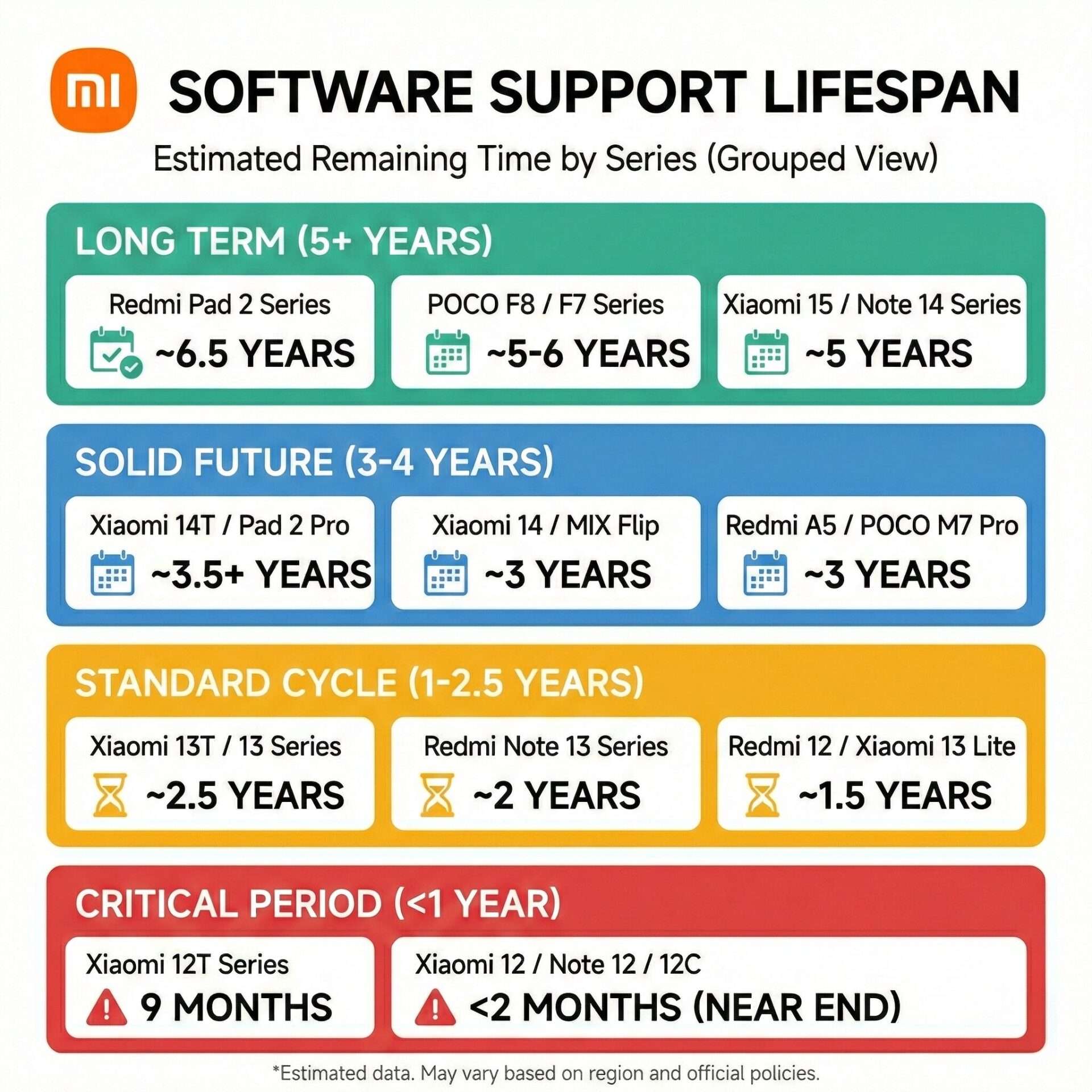
However, Xiaomi is now countering this trend in their latest Silicon-Carbon (Si/C) anode material used in Xiaomi 15 and 1TT Pro models, which enable greater battery density, meaning that now a 6000mAh battery will fit where a 5000mAh battery used to fit. According to Xiaomi, these new cells can retain 80% of their capacity after 1,600 cycles. This is expected to retain the battery in its “youth” for about 4.4 years for an average user. However, for those who are light users, you can expect your battery life to reach up to 7 years, but gamers will experience degradation sooner.
The Secret Sauce: Surge Chips and Smart Charging
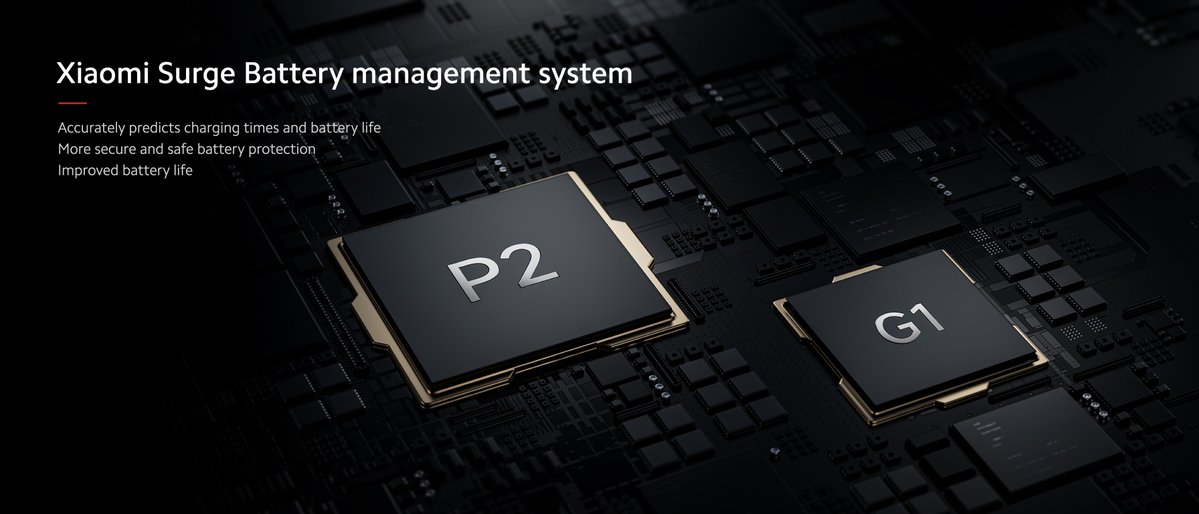
For the purpose of handling this aging process, Xiaomi integrates their own silicon, which is known as the Surge G1 battery management chip and the Surge P3 charging chip. What has caught my attention is the fact that the former operates like a “digital doctor” for the battery cells. They continuously check the status of the battery and regulate the speed of HyperCharge to prevent heat, which is the number one killer of batteries. With the use of “Smart Repair” algorithms, the system can ensure that the batteries are balanced, thereby slowing down the natural process of entropy.
Is This a Trick to Sell More Batteries?
Some skeptics on the Reddit forums believe that the purpose of these lengthy updates is to compel users to spend money on battery repairs. But when we examine the math, this theory just doesn’t add up. In the country of China, for instance, the battery replacement for the REDMI Note 14 Pro starts at just 103 RMB (~$14.45). Even in the Global market, the cost of the repair is likely to be between $30 and $60.
If one considers the millions of dollars Xiaomi is investing in its engineering staff in order to sustain Xiaomi HyperOS as well as Xiaomi HyperConnect for a period of seven years, the gain derived from the $15 battery replacement is insignificant. The actual objective is Customer Lifetime Value (LTV). We think that Xiaomi wants to retain you as a user of your phone because it is more likely that a loyal customer will purchase a Xiaomi Pad 7, an XRING O1, or even a Xiaomi SU7 electric car. They actually make money from Internet Services.
What’s Next for the 7-Year Era?
This has been made possible by the EU’s Ecodesign Regulation, whereby the EU requires that updates be provided by the manufacturer for years to come. This is a win for the planet, as well as a win for your pocketbook. Even if you have to replace the battery at year four, it’s much cheaper than having to buy a whole new Snapdragon 8 Elite-class phone. We’re clearly headed down the path towards “Device as a Service” with the operating system extending the youthfulness of the phone while the hardware gets serviced as if it were an automobile. Would you be willing to pay for one battery swap in order to be able to use your flagship smartphone for the next 7 years? Let us know in the comments below.



I do not see the HOS 3
POCO x6 pro 5g
hyper OS 3
where is Hyper OS for Xiaomi 12 pro I came to know through news 💌 er that it will com to end of OS update and security patch by the end of March 2026. that news l
in continuation……that news letter s
assured the customers having Xiaomi 12 pro will have Hyper OS 3 and the it will close. Now allmost we are in the middle of January. When will my phone Xiaomi 12 pro get OS 3
You manufacture too many types of phones, so you hardly have time to update even a phone that is just over a year old. Soon, only the POCO F6 hasn’t received the HyperOs 3 update 🙁 You are very sloppy :(((((.
if the battery is the issue why not replace it?
I have the Xiaomi 15T and the Xiaomi note 12 pro..both phones have pros and cons. The 15T is my primery phone dye to battery and storage size…having 7 years of updates and security patches is what partly made me buy the device. This is my firsr phones from Xiaomi, but other devices I’ve had including an Oppo which last 6 years without a battery change, so I’m hoping the same for my current device👍👍