


With HyperOS 3 HyperIsland, Xiaomi continues to strengthen its ecosystem strategy, a key interface innovation that, for the first time, supports more than 60 applications in China. Announced on stage during the 2025 Xiaomi “Human, Car, Home, and Whole Ecosystem” Partner Conference, the feature has represented for some time Xiaomi’s long-term vision to enable seamless cross-device experiences. As Xiaomi continues its expansion of HyperOS capabilities, features like HyperIsland are becoming core to the daily usage of smartphones, tablets, and smart devices.
HyperOS 3 HyperIsland Scales to New Heights
Introducing HyperOS 3, it features HyperIsland as an integrated interaction layer, designed to surface real-time information and shortcuts without disrupting active tasks. According to Li Nan, General Manager of Xiaomi’s Software Product Department, the already-supported list of over 60 applications applies this into adaptation for over 75 real-world usage scenarios, making HyperIsland probably one of the most scalable system-level UI features Xiaomi has released to date, let alone in its China-focused HyperOS deployments.
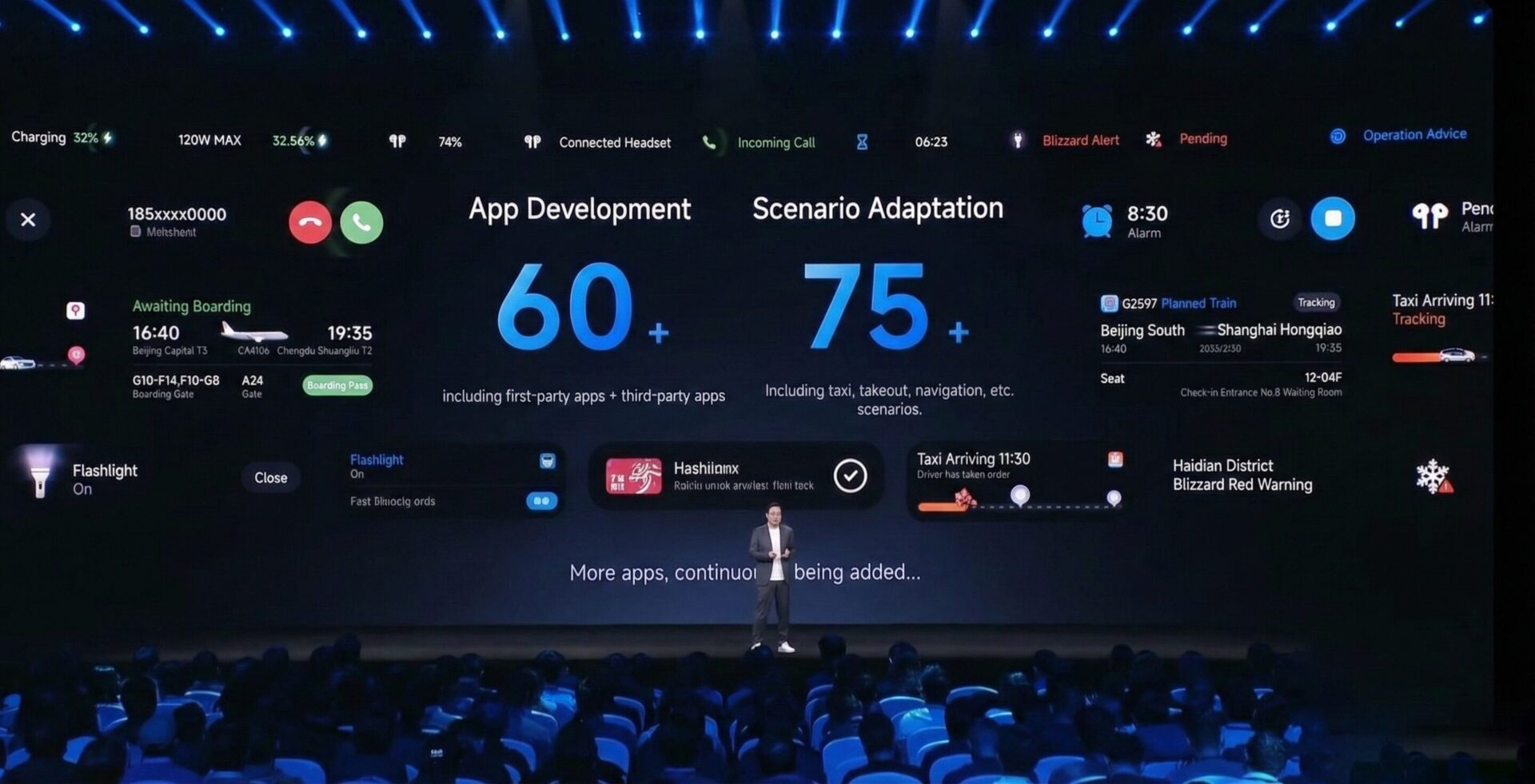
Efficiency is the design goal of HyperIsland, where users can get contextual information, quick actions, and live updates right from the interface without having to even open full applications. This way, it perfectly aligns with Xiaomi’s focus on productivity, battery efficiency, and reduced system overhead.
Support for Developers & Adaptation to Multiple Devices
At the same time, Xiaomi opened HyperIsland to developers by providing standardized templates. Templates allowed apps to adapt once and be consistently shown on multiple types of devices (smartphones, tablets, devices with secondary rear displays, and with products with external screens).
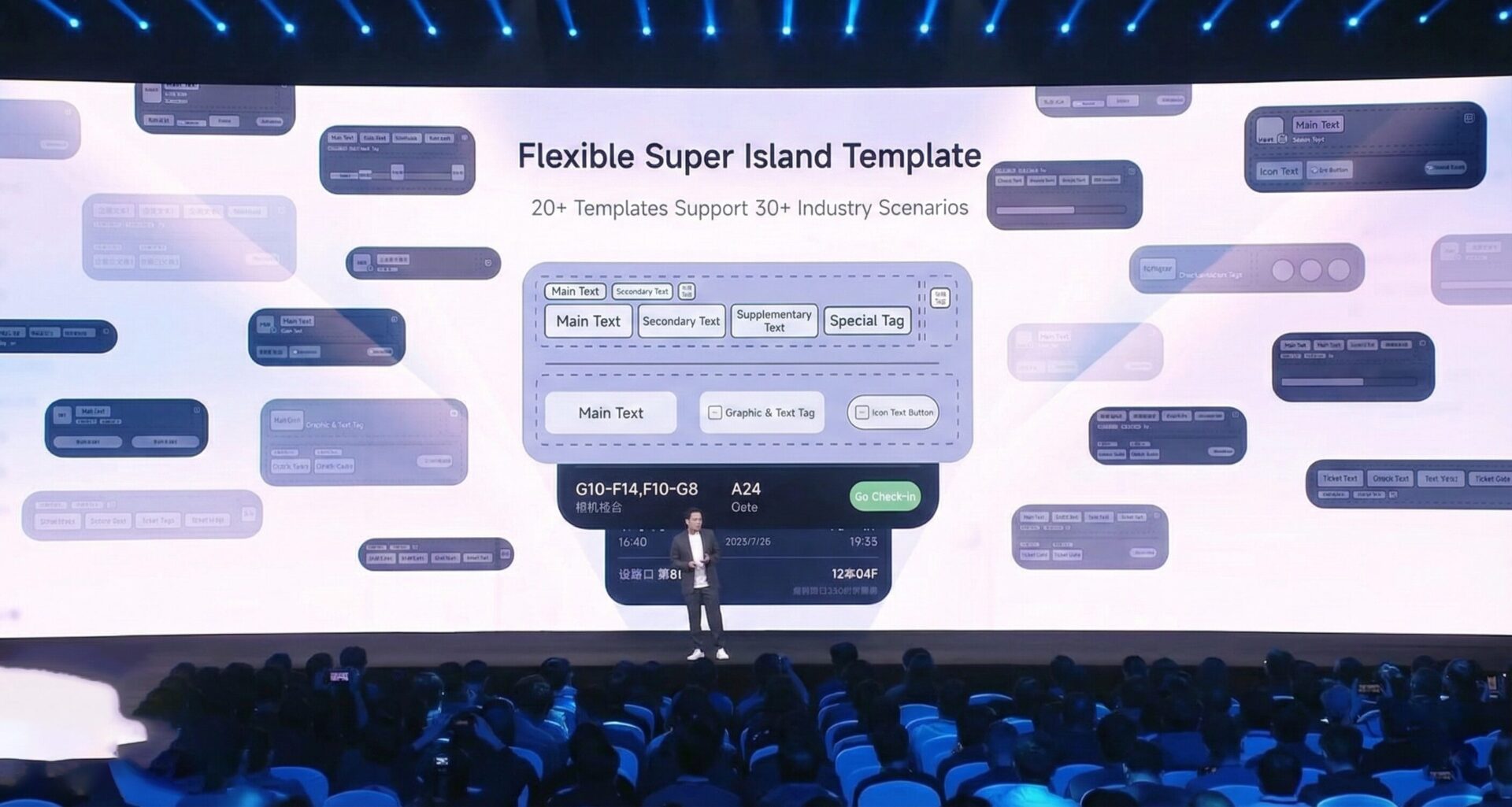
This unified development approach reduces fragmentation and ensures consistency in the user experience across Xiaomi’s ecosystem. To developers, it cuts adaptation costs; for users, it means HyperIsland behaves predictably irrespective of device category.
Ecosystem Growth and Global Outlook
Li Nan further shared ecosystem-scale metrics, stating that Xiaomi’s “Human, Car, Home” ecosystem reaches 410 million daily active devices, while 32.99 million interconnected devices are controlled daily. These figures underpin why features like HyperIsland are strategically important, acting as a central interaction hub across categories.
While HyperIsland is currently available in China, expectations remain high for a global adaptation within future HyperOS releases. Historically, Xiaomi has refined such features in China before introducing them internationally, updating localization and compliance considerations as necessary.



why does the hyperos 3 update didnot came in my device poco m6 5g I also wanted to experience the hyperos 3 on my device
ok i God it
update hyper OS redmi note 9 Pro
google dailer not working in hyper island xiaomi 15
if id wanted island on my screen I would have bought iphone?
I an update of HyperOS3 on my redmi Note 14 . 4 G Lite
ok, now I need the tap status bar go to top function.
Most important app is call app but global rom have Google phone app doesnt support hyperisland. UX bad Google phone app.
i have Xiaomi 14 and it’s really annoying that hyperisland can’t be turned off
hyperos looks great. but i stuck in miui 🙄
I m update hyper OS 3 redmi note 13 4g Pro please 🥺🥺🥺🥺
redmi note 12 pro 5g
I got the update this morning on my Xiaomi Pad 7 but i can’t feel the island. idk if I didn’t get it or it was different from phones