


The Xiaomi 17 Ultra is definitely a sharp turn in developing mobile cameras and shifting the focus from heavy software processing back to optical quality. Introducing a Leica APO-certified telephoto lens coupled with a 200MP sensor, Xiaomi aims at essential image accuracy rather than fixing images through post-processing. This strategy is in line with the long-term imaging strategy and extensive partnership with Leica.
What is Leica APO technology?
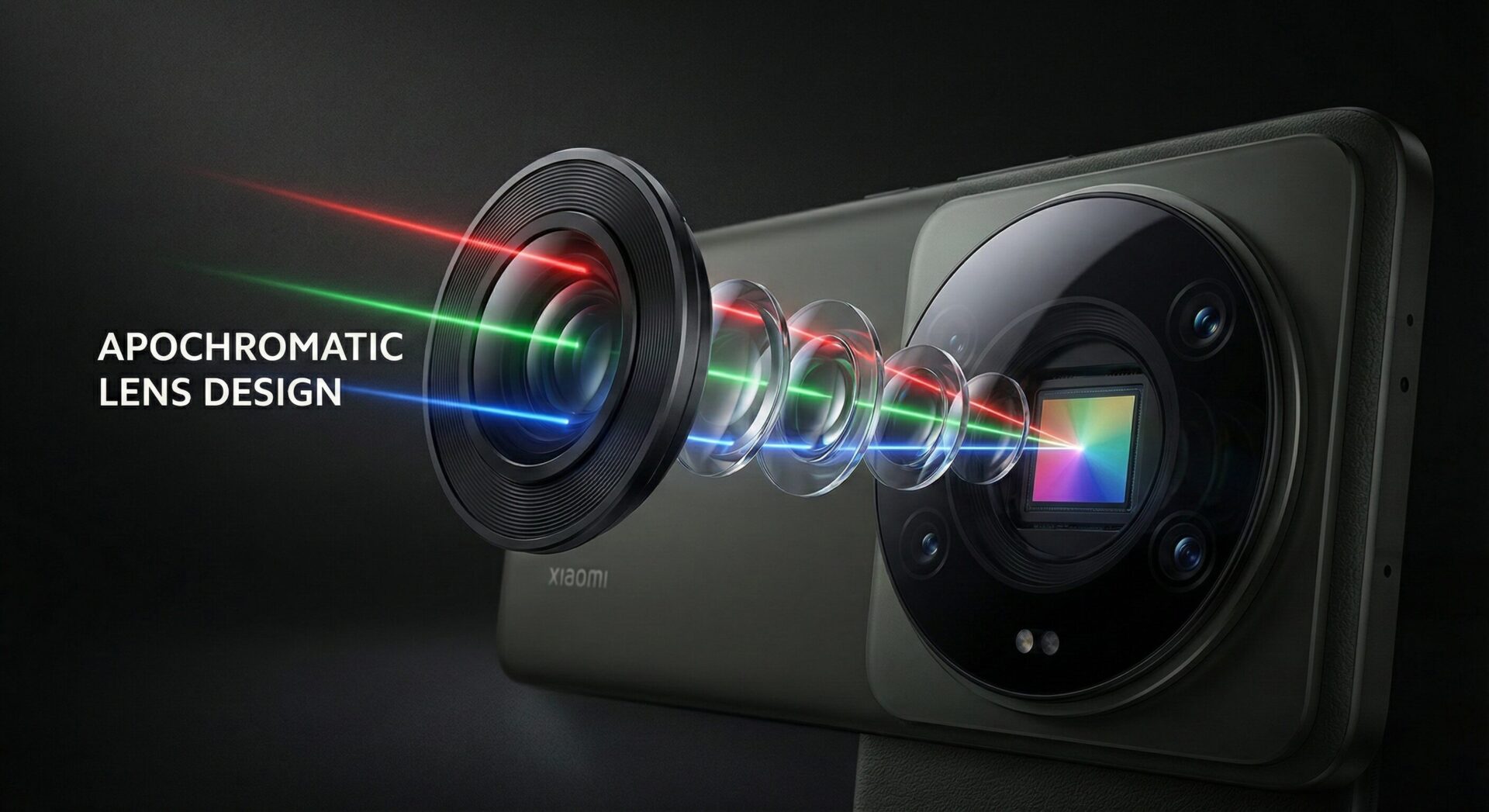
Leica APO stands for apochromatic lens design, which is a very high optical standard for a smartphone. The main goal of such a design is to correct color dispersion at the physical lens level, even before light reaches the sensor.
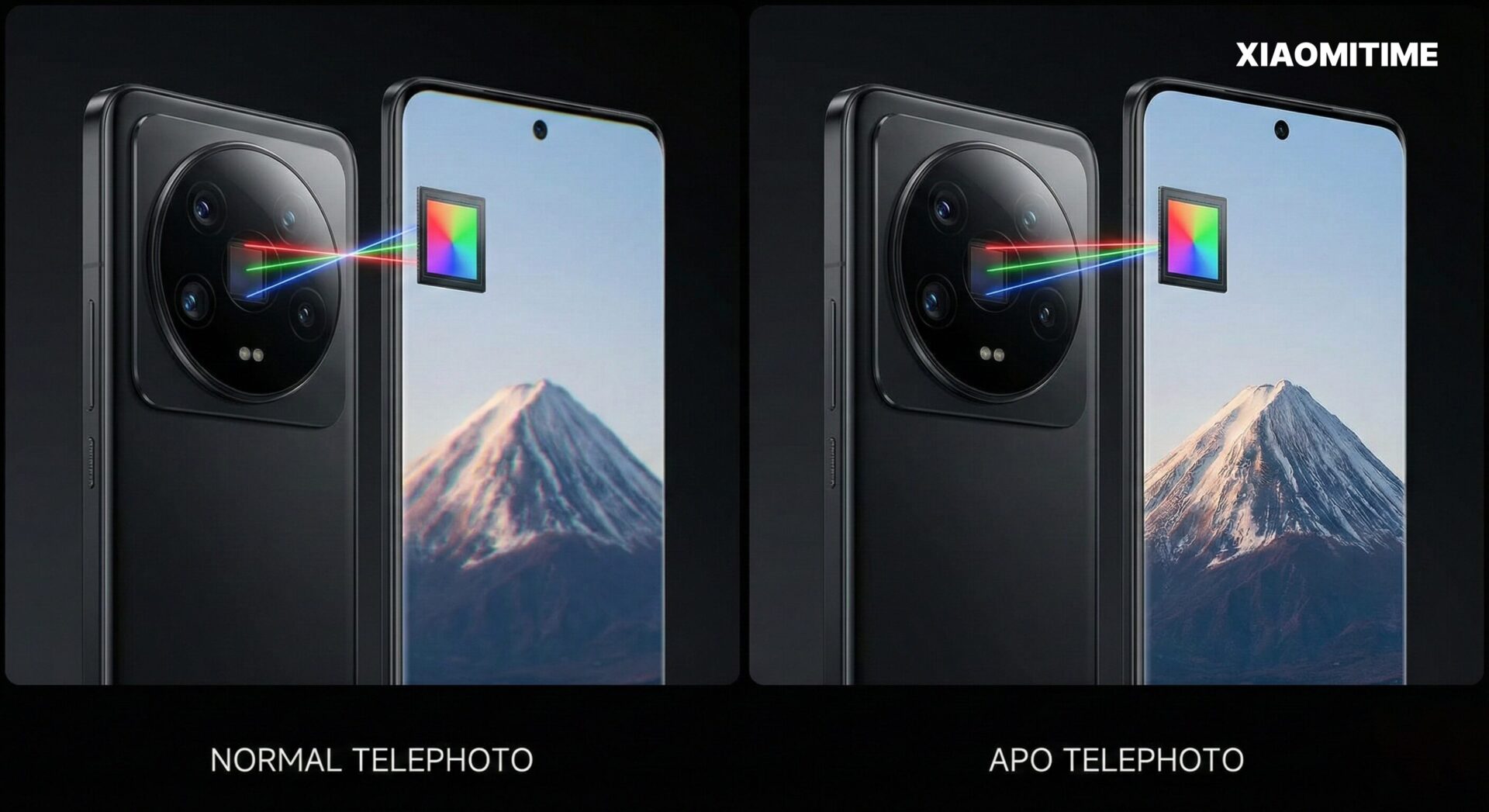
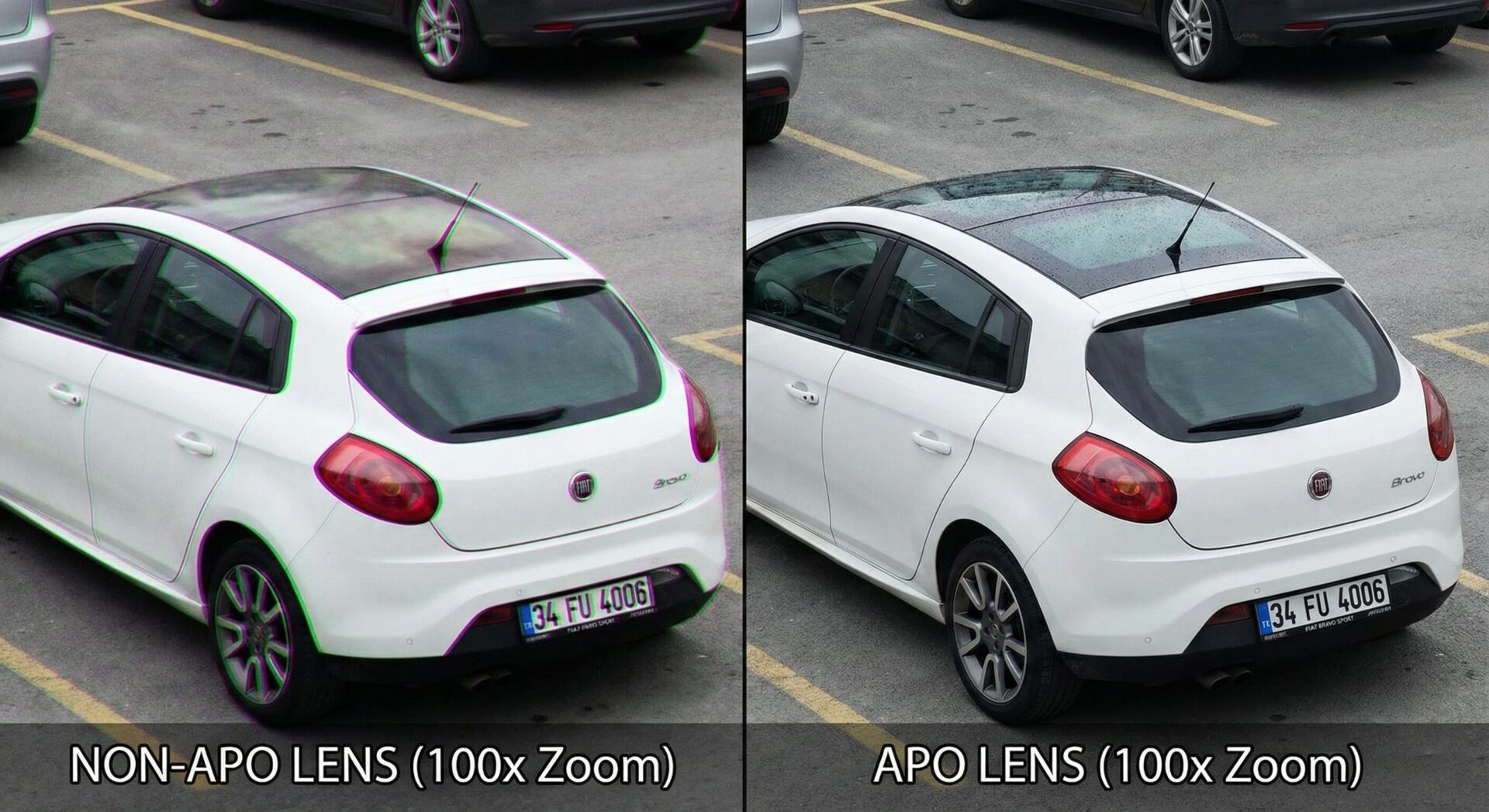
In standard lenses, different colors of light are focused at slightly different points. This results in color fringing, especially around high-contrast edges. Leica APO lenses are engineered to bring red, green, and blue light into a single focal plane. Thus, images show cleaner edges, higher micro-contrast, and more accurate color rendition without relying on software correction.
APO vs. Standard Mobile Telephoto Lenses
Standard telephoto lenses employ an achromatic design, which corrects only two colour wavelengths. The famous brand Leica aligns three principal wavelengths by APO lenses, ensuring minimal chromatic aberration.
Optical Structure-How Different is Xiaomi 17 Ultra?
And the Xiaomi 17 Ultra does not rely on older W-type or traditional L-type periscope designs alone, but introduces a floating APO telephoto structure optimised for large sensors.
First, before going into details, it should be noted that the structure of a lens directly influences light efficiency, focus range, and image consistency.
| Feature | Normal Lens (Achromatic) | APO Lens (Apochromatic) |
| Color Focusing | Brings 2 colors (Red/Blue) to a common focus point. | Brings 3 colors (Red/Green/Blue) to a common focus point. |
| Edge Quality | Purple/Green fringing (Chromatic Aberration) may be visible. | Edges are clean and colorless (fringing-free). |
| Sharpness | Good, but can look soft at 100% zoom. | Very high, razor-sharp clarity and contrast. |
| Cost & Build | Cheaper and easier to manufacture. | Much more expensive, heavier, and uses complex glass elements. |
Key Structural Advantages
- Single optimized prism path reduces the light loss often found in older multi-reflection systems.
- Floating focus mechanism enables precise focusing from long distances down to close-range macro shots.
- High light transmission: To accord with consistent image quality in both day time and low-light scene scenarios.
This design will improve optical efficiency without sacrificing the compactness of the module to a factor that would not fit in a smartphone.
200MP Sensor Integration and Image Quality
Meanwhile, the APO lens of Leica in Xiaomi 17 Ultra works together with a 200MP Samsung ISOCELL HP9 sensor. This is indispensable, as the ultra-high-resolution sensor takes extremely tight optic tolerance.
For normal shooting, the sensor employs pixel binning to boost sensitivity to light. With its large resolution, it’s sensor-level cropping instead of digital enlargement when zooming is used, which preserves more detail and avoids many common zoom artifacts. Practical Benefits for Users Smaller color fringing – cleaner images
- Consistent sharpness at all focal lengths
- Natural color profile according to Leica’s imaging profile
- Improved telephoto performance under low lighting conditions
APO Leica: Why It Matters for Mobile Photography
Equipped with Leica APO technology, the Xiaomi 17 Ultra delivers images with a more optically clean look rather than a heavy, digitally enhanced taste. The reduction of aggressive software correction can allow pictures to maintain more natural textures and color balance.
This technique does provide much better consistency between the main camera and the telephoto camera, one of the general weaknesses for many smartphones.
The Leica APO telephoto system on the Xiaomi 17 Ultra means a significant step toward mobile imaging. Not stuck between higher megapixels or stronger algorithms, Xiaomi has invested in optical precision down to the level of hardware. Combined with a 200MP sensor and advanced lens structure, this provides much clearer colors, higher detail, and more reliable zooming. Equally, the Xiaomi 17 Ultra sets a very strong reference point for users looking to understand what camera-focused smartphones are capable of in their modern iterations.



