

 Emir Bardakçı
With the rapid adoption of true wireless earbuds across the continent, compact audio devices became a big part of everyday life in Europe, but at the same time, this increased the chances of losing them even more. Xiaomi’s Redmi Buds, Xiaomi Buds, and their POCO-branded equivalents-sold as Xiaomi T series globally-are among the widely used ones within the European Economic Area, where its small size and cable-free design can become a practical disadvantage.
Understanding what can and cannot be done in case of a loss will help manage expectations and take the right technical steps.
Understanding how to locate Xiaomi earbuds
Before recovery attempts, it is critical to acknowledge the technical limitations of wireless earbuds. Unlike smartphones, Xiaomi earbuds do not include any GPS modules or cellular connectivity. Location detection must therefore be indirect and depends entirely on Bluetooth signals and software ecosystems.
Modern Xiaomi earbuds employ Bluetooth Low Energy, usually based on Bluetooth 5.2 or 5.3, or newer standards. When an earbud is outside its charging case and has some battery power, it periodically broadcasts a signal. Smartphones can estimate proximity using the signal strength values, commonly referred to as RSSI. This method will only work for short distances, typically less than ten meters, and thick walls, commonly found in European buildings, will weaken signals considerably.
This normally means that when the earbuds are inside the charging case and the lid is closed, Bluetooth transmission is usually disabled at the hardware level. In this state, digital tracking isn’t possible. Of course, once the battery is completely dead, all signal transmission stops, making the recovery a purely physical search.
Using Effective Xiaomi & Google Software Tools
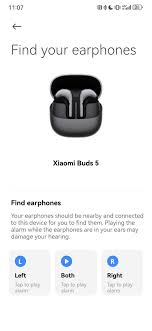
Xiami, on their part, offers simple recovery capabilities via the official earbuds management application. Thus, the “Find your earphones” feature can only be helpful in quiet indoor environments like homes or offices because it allows users to initiate a loud ringing from the earbuds provided they are currently connected to the phone.
The application also logs the last known location where the Bluetooth connection was active. This is static information and does not update if, at some point afterward, the earbuds have moved. It is rather to be used as a reference point than as live data from tracking.
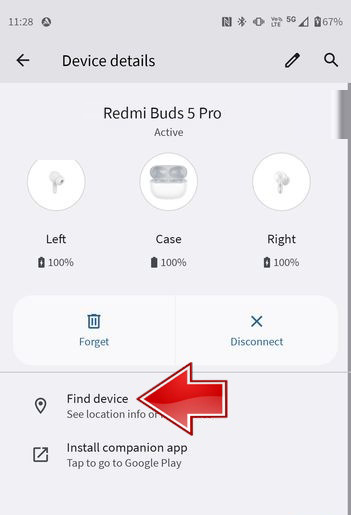
Newer Xiaomi earbuds that support Google Fast Pair are able to integrate with Google’s “Find My Device” network. If an Android device is nearby an, in a sense, misplaced earbud, it may anonymously detect the Bluetooth signal and report an approximate location back to the owner. This can be very helpful if your earbuds go missing in a busy urban area, though the earbuds do need to have some juice left in them. A completely dead earbud cannot be found via this network.
Practical steps toward recovery in Europe
Timing is most crucial when the earbuds are lost. When the device still has power, taking action as soon as possible improves the possibility of recovering these devices.
Check the last known location of the Xiaomi Earbuds in the app or using Google Find My Device. Return to that area with Bluetooth turned on. In indoor environments, lowering background noise and activating the sound alert narrows down their location. Third-party Bluetooth scanner apps may help advanced users by showing how the signal strength changes as a person walks through a space.
If the loss took place in a public transport or shared area, contact the local lost-and-found services. European transport operators often list small electronic items only descriptively without serial number, but having the purchase documentation may help.
Replacement options and cost considerations
If recovery is unsuccessful, replacement becomes the next decision point. With the exception of very few cases, officially individual earbuds or charging cases are hardly sold as stock items in official Xiaomi channels in Europe. Some replacements may be offered for a fee by authorized service centers, with prices often approaching that of a new set, especially in the case of budget models.
IndividualIssues with Third-Party Sellers
Some third-party sellers sell single earbuds, mostly sourced from outside the EU. Although this offers cost savings for premium models, shipping times and possible warranty limitations should be carefully weighted. For more affordable Redmi Buds variants, buying a new pair is often the most convenient and pragmatic approach.
After having replaced a single earbud, users need to make a full reset and re-pair it so that the new and existing parts will be able to synchronize appropriately. Firmware updates via the official app are highly recommended for stable performance.
Future preventive measures
Sometimes, prevention is better than recovery. It’s highly recommended to enable Google Find My Device at setup. Protective cases with keyrings attached or an external Bluetooth tracker attached inside the charging case can greatly reduce most risks. Doing periodic system app updates through trusted sources such as HyperOSUpdates.com or using tools like the MemeOS Enhancer application will let one have the bleeding-edge features added into the ecosystem and all stability enhancements.
Losing European Xiaomi earbuds is a manageable situation when one understands the real technical and logistic facts. Recovery tools based on Bluetooth can work within conditions, and there are no guarantees provided. For premium segment models, the replacement of a single module might be economically reasonable; in entry-level ones, it is often more advisable to replace them completely. As in most cases, the best strategy remains one of proactive prevention, which combines software activation with physical accessories and informed habits of use.


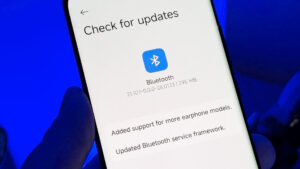
By the way good News for Redmi note 13 pro 4g global version. I have received hyoerOS 3.0 based on Android 16
By the way good News for Redmi note 13 pro 4g global version. I have received hyoerOS 3.0 based on Android 16 it is wow to experience hyperIskand