


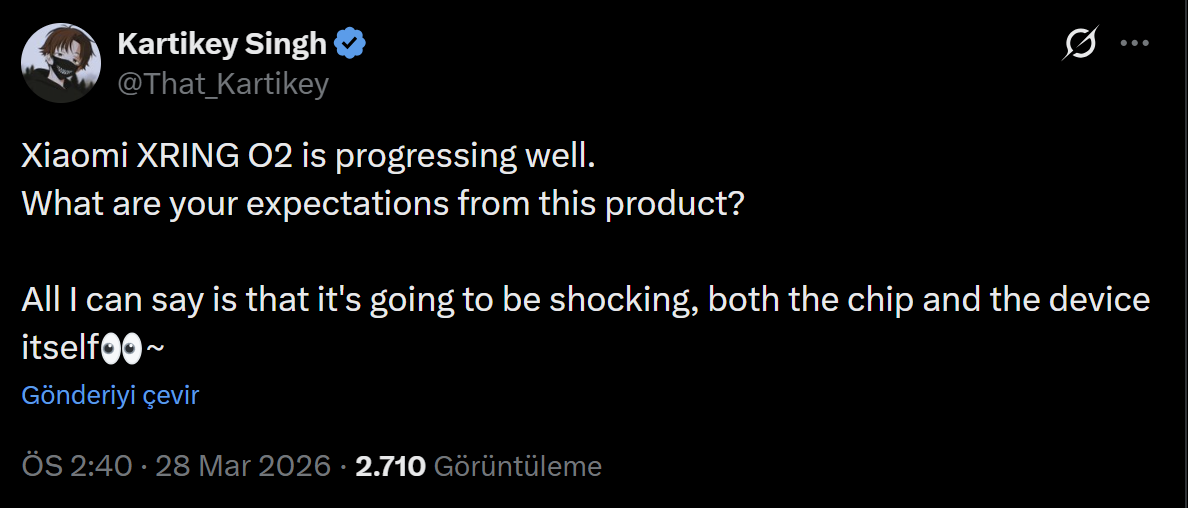
Renowned technology leaker Kartikey Singh has sent shockwaves through the community with a new teaser regarding Xiaomi’s next-generation in-house silicon. According to Singh, the development of the XRING O2 is “progressing well,” and the results are expected to be “shocking, both the chip and the device itself.” Following the China-exclusive debut of the first-generation XRING O1 in 2025—which powered the Xiaomi 15S Pro and the Xiaomi Pad 7S Pro—the highly anticipated XRING O2 has users speculating about a potential global release and a massive leap in performance.
Users Want 2nm Node, Advanced ISP
While Xiaomi has not officially confirmed the technical specifications, the leak has sparked intense discussions and high expectations among users. Based on the community’s current demands and supply chain whispers, here is what fans are hoping to see:
-
2nm Manufacturing Process: Users are heavily anticipating that the XRING O2 will be built on an advanced 2nm node. If true, this would offer unprecedented thermal efficiency and power management for future flagships.
-
Next-Generation Image Signal Processor (ISP): A vastly improved ISP is at the top of the community’s wishlist. Fans expect this to translate into superior low-light computational photography and enhanced video rendering for Leica-branded Xiaomi optics.
-
Aggressive Pricing Rumors: Speculation suggests that the XRING O2 could be priced lower than the flagship Snapdragon 8 Elite. If these rumors hold up, it would give Xiaomi a significant edge in producing cost-effective premium devices.
-
First-Ever EV Integration: Perhaps the most exciting expectation is the potential for automotive use. Rumors are circulating that the XRING O2 might be engineered to power the smart cabins of future Xiaomi EVs, acting as the primary brain for in-car infotainment.
Expected Device Categories
Although exact models are currently undisclosed, the community expects the new silicon to target the following hardware categories:
-
Next-Generation Xiaomi Flagships: Hoping to succeed the Xiaomi 15S Pro tier, potentially on a global scale.
-
Upcoming Xiaomi Pad Series: Expanding upon the foundation set by the Xiaomi Pad 7S Pro.
-
Future Xiaomi EVs: Bringing flagship-grade smartphone silicon to automotive smart interior.
How the Hardware Could Improve the Ecosystem and Market Impact
If these user expectations and rumors materialize, the transition to the XRING O2 could represent a massive shift in Xiaomi’s market strategy. Utilizing a rumored 2nm process and potentially undercutting the high costs associated with the Snapdragon 8 Elite would allow Xiaomi to deliver top-tier performance at a highly aggressive price point. Furthermore, bridging the gap between smartphones, tablets, and cars with a unified chip would ensure a seamless flow of data across the entire user ecosystem.



