


The war in the display of smartphones is about to enter a new chapter as it is reported that Samsung is developing components with 185Hz display screens. Just as 165Hz display screens have just entered the market in commercial smartphones, it seems that the future of high refresh rates will soon become an essential part of the Android landscape. Interestingly, this comes as a positive development in the race of display technology as the manufacturers like Xiaomi observe it keenly. Such trends have already been observed in our previous reports on Xiaomi display technology advancements, HyperOS optimization, and Snapdragon development.
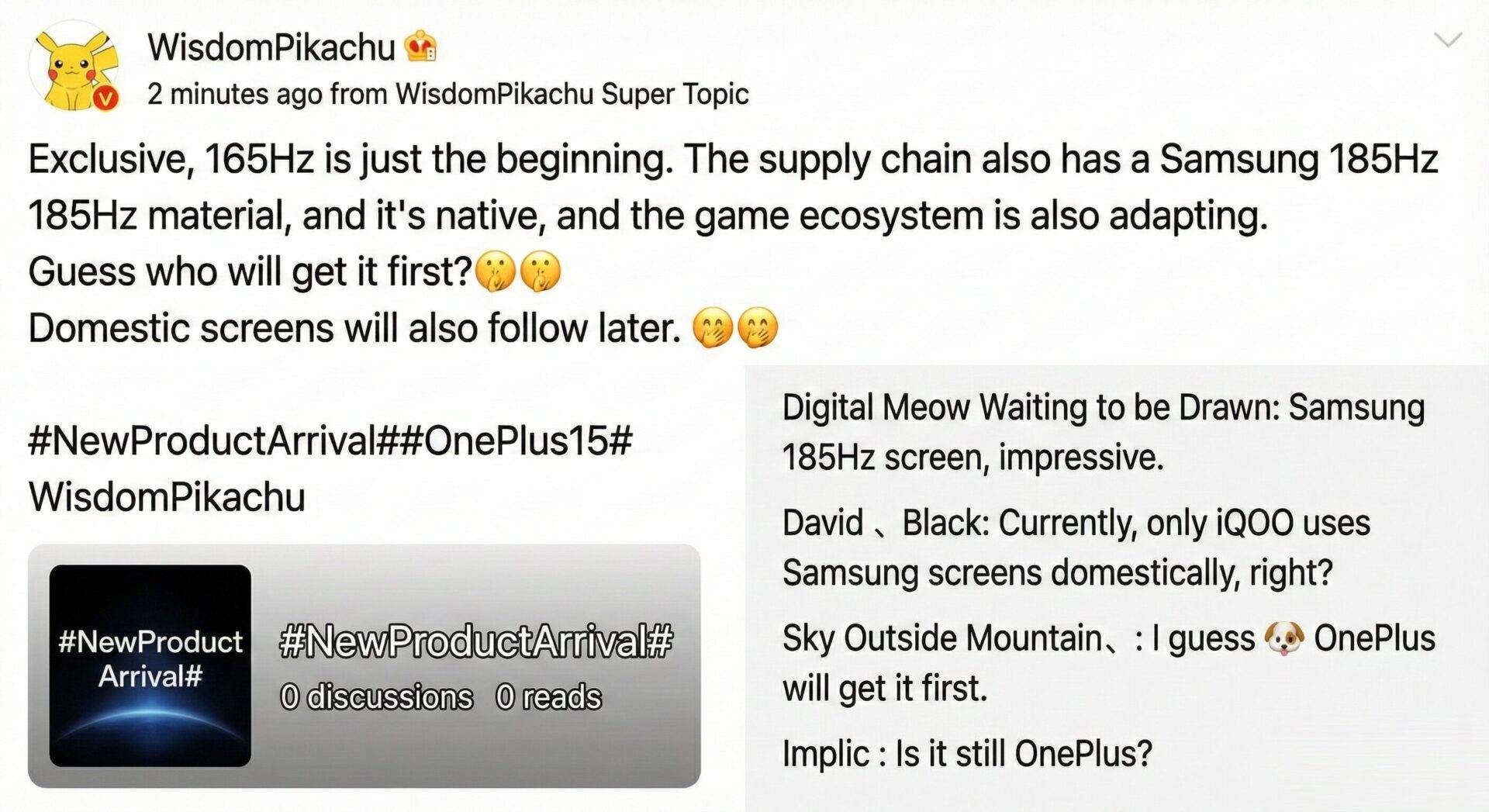
165Hz Was Only the Starting Point
The firstconsumer smartphones with 165Hz screens emerged in late 2025, led by OnePlus, among other manufacturers. Though primarily intended for gaming audiences, the screens featured improved motion and reduced latency in compatible games. The native gaming modes of these smartphones in their associated gaming titles proved that higher refresh rates could have tangible benefits.
However, adoption is still limited. This is because most apps and system interfaces are still running on lower refresh rates and therefore the practical benefit of 165Hz is still situation-dependent and not for all scenarios.
Samsung 185Hz Parts Enter the Supply Chain
According to sources in the supply chain industry, Samsung Display has already been ready with screen parts that have a refresh rate of 185Hz and are optimized for the hardware. Chinese manufacturers of displays are also expected to take the same direction as a sign that 185Hz is not going to be a monopoly on the industry very soon.
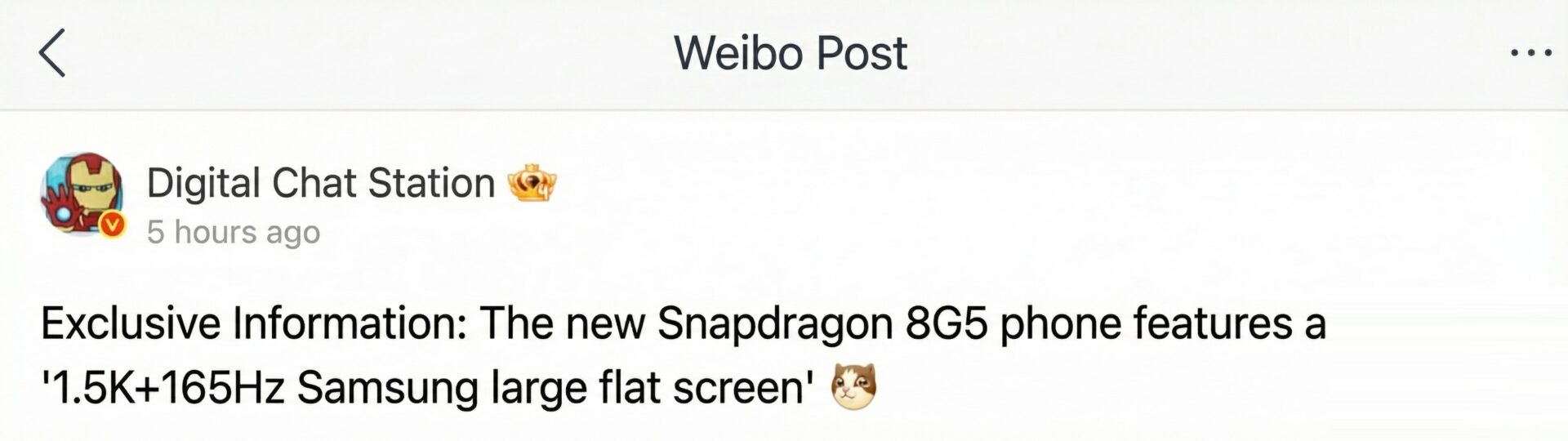
Leakers also indicate that future flagship models featuring next-generation Snapdragon technology might come with 165Hz and above refresh rates and 1.5K resolutions. All this points towards the fact that the move might be considered long-term and not just a testing or experimental phase.
Does This Mean Xiaomi Is “Behind”?
Technically, Xiaomi has always played a balance or not pursued an extreme policy. With some others pursuing a refresh rate above 165Hz, Xiaomi has remained passionate about energy efficiency, stability, and adaptive LTPO display, especially when powering the Xiaomi HyperOS flagships. The idea is that for an average customer, a properly optimized display with a high refresh rate of 120Hz or 144Hz LTPO may provide a more fluid motion than a higher fixed refresh display that consumes more battery life.

It is also a fact to be considered that refresh rate above a very high extent diminishes in relevance. After crossing the refresh rate of 144Hz, it will no longer contribute effectively to visual improvement, which will then be noticeable only in a special gaming situation. It is thus not a mark of stagnation on Xiaomi in adopting a conservative strategy.
Market Impact and Relevance
Adoption of displays that feature 185Hz refresh rate should be viewed more in terms of an indicator of what can be achieved from a technological point of view. Such displays do not constitute an urgent demand for every individual to purchase. Xiaomi appears ready to conform to displays that offer an increased refresh rate once this fits into real-world usability.
However, users who are interested in updating the system applications on the Xiaomi phone, as well as unlocking hidden features, are able to do so through the Xiaomi applications, preferably through the assistance of the HyperOSUpdates.com website or the MemeOS Enhancer from the Google Play store, which also grants users access to hidden features on the Xiaomi phone.



