
Over the past few weeks, OPPO and Vivo have adjusted pricing on several devices, largely due to rising costs of key components such as memory and storage. Industry sources indicate that this supply strain may persist into 2026, forcing manufacturers to rethink how they balance performance, pricing, and profitability—especially in the highly competitive mid-range segment.
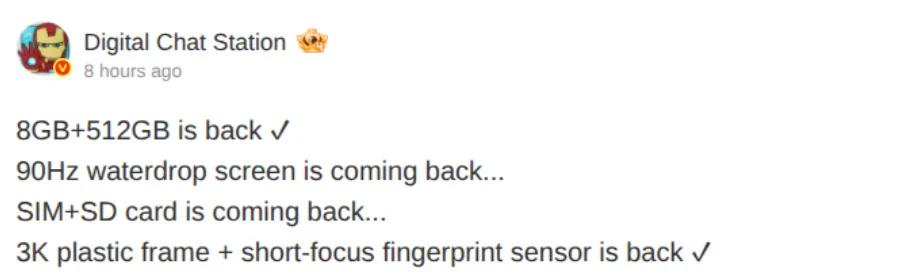
According to a leak from Digital Chat Station, smartphone makers are now exploring cost-cutting measures that include reintroducing previously phased-out design elements. Among the most notable changes being considered is a reduction in high-end configurations, with some future devices potentially topping out at 8GB of RAM while still offering up to 512GB of storage.
Old designs could return as brands cut costs
One of the more surprising potential changes is the return of the water drop notch display, a design that has largely been replaced by punch-hole and under-display camera solutions in recent years. Alongside this, refresh rates may be capped at 90Hz instead of the now-common 120Hz, helping to reduce production costs without significantly impacting everyday usage.
Expandable storage—once a staple feature but gradually removed from many modern smartphones—could also make a comeback. This move may appeal strongly to users who prioritize flexibility and long-term usability, especially in markets where cloud storage adoption is still growing.
Other possible adjustments include the use of plastic frames instead of metal and a shift back to optical fingerprint scanners, which are generally more cost-effective compared to newer technologies.
While these changes are not yet confirmed and remain speculative, they highlight how rising production costs could influence smartphone design decisions in the near future. If consumers resist higher prices, brands like OPPO and Vivo may lean further into these practical trade-offs. On the other hand, sustained demand for premium features could push manufacturers to absorb costs and continue innovating.
Either way, 2026 could mark an interesting turning point—where familiar features once thought obsolete find their way back into the spotlight.