 Emir Bardakçı
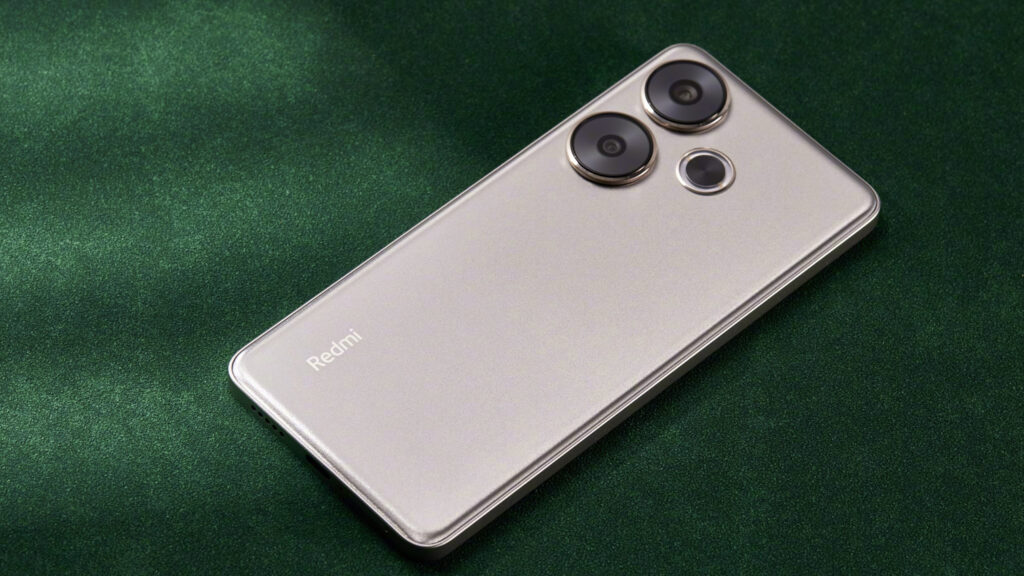
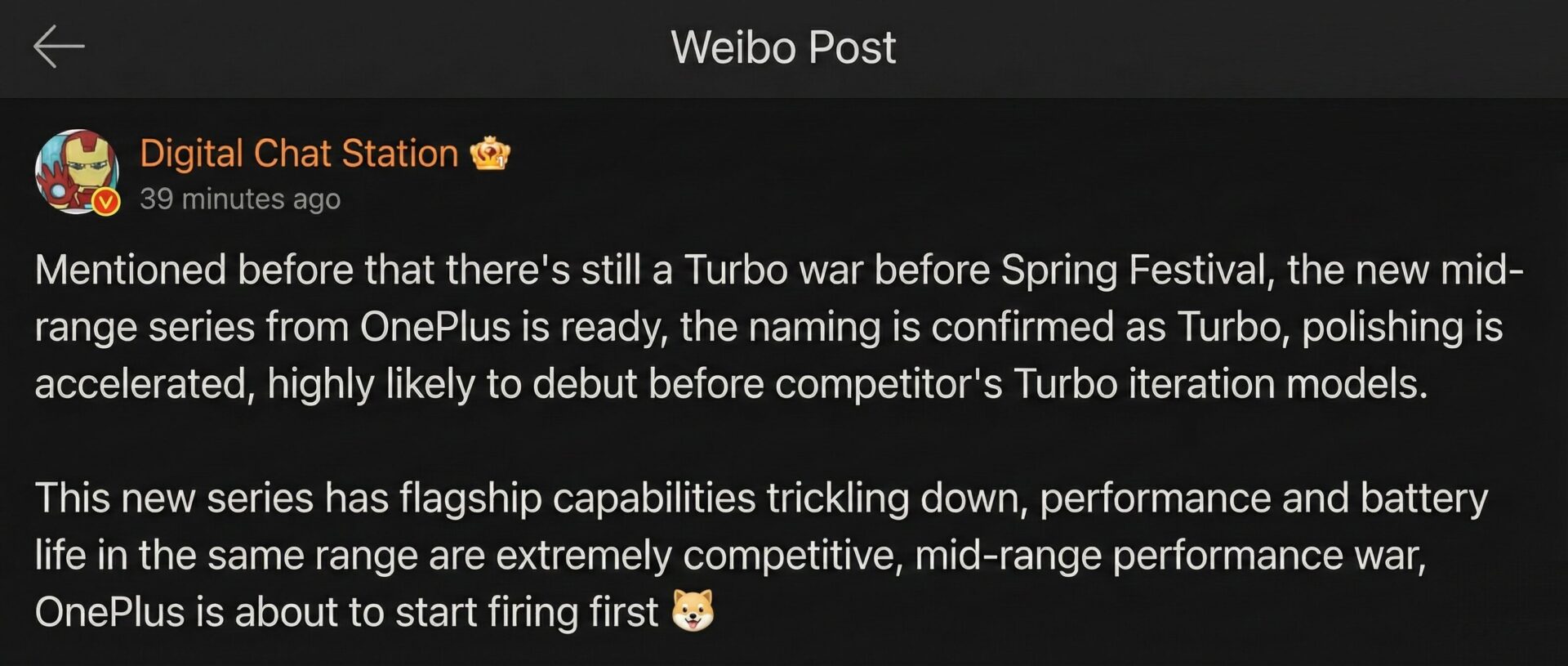
As revealed by a well-known Weibo blogger in the tech circle @DigitalChatStation, OnePlus is set to release a completely new range of mid-range mobile devices branded as Turbo. However, it appears that this is almost ready for release and could actually precede other devices with similar features that could be in the works. This announcement is timely since Chinese firms are rushing to meet the demands of the next range of mid-range devices with exceptional processing power, with such devices having been characterized by a series of Xiaomi-led “Redmi Turbos” or “POCO” flagship models like the REDMI Turbo 3.
Positioning and core focus of the Turbo series
Early reports indicate that the OnePlus Turbo line is aimed at offering almost flagship performance at a more reasonable price point. The blogger is keen to point out that both the processing power that can be achieved as well as the endurance of the battery would be very competing for such devices. This is no different from what Xiaomi does with its devices that offer big batteries, good chipsets, with good heat management solutions.
Moreover, the name “Turbo” is also special. Xiaomi is using “Turbo” branding consistently to position it as a performance-oriented device, or at least position it as such in the Redmi-series offerings. This is more evident in the REDMI K series or the Turbo series that is exclusive to the Chinese markets. This is eventually renamed to the global counterparts of either the POCO or the Xiaomi T series. This fact about OnePlus following the same pattern for their devices reveals the influence of Xiaomi’s branding rationale in the industry.
Displaying the graph
An interesting discussion that took place in the comment section of the initial blog post suggested that high refresh rates would become one of the defining features of such displays. Though no official numbers were mentioned, the blogger revealed that ultra-high refresh rates would become a reality in the current year with more widespread support in the upcoming year. This is in line with what is taking place in the market, as higher refresh rates, 1.5K resolution, or even touch sampling rates are becoming commonplace.
From a performance standpoint, upcoming mid-range processor solutions like MediaTek’s Dimensity 8500-series, as well as the coming Snapdragon 8-series variant by Qualcomm, are projected to drive this respective market. It is important to acknowledge that what Xiaomi has achieved with their mid-range devices is actually the benchmark for what is to come.
A Known Strategy in a Competitive Market
Industry observations reveal that various companies are gearing up for a fierce “mid-range performance phone” battle before the Spring Festival season in China. Batteries from the 7,000 mAh variant onwards, metal bodies, and advanced in-display fingerprint technology are anticipated to become more widespread. It is not surprising that various companies are treading the same path since Xiaomi had taken the initial step to shape the expectations of their users.
Although OnePlus Turbo is about to present its own vision, it is more of a reflection of a market influenced by consistency in Xiaomi’s brand positioning for performance with their products. It is inevitably true that the rising levels of competitiveness would eventually mean better products for the end-consumer at a lower cost.