
 Emir Bardakçı
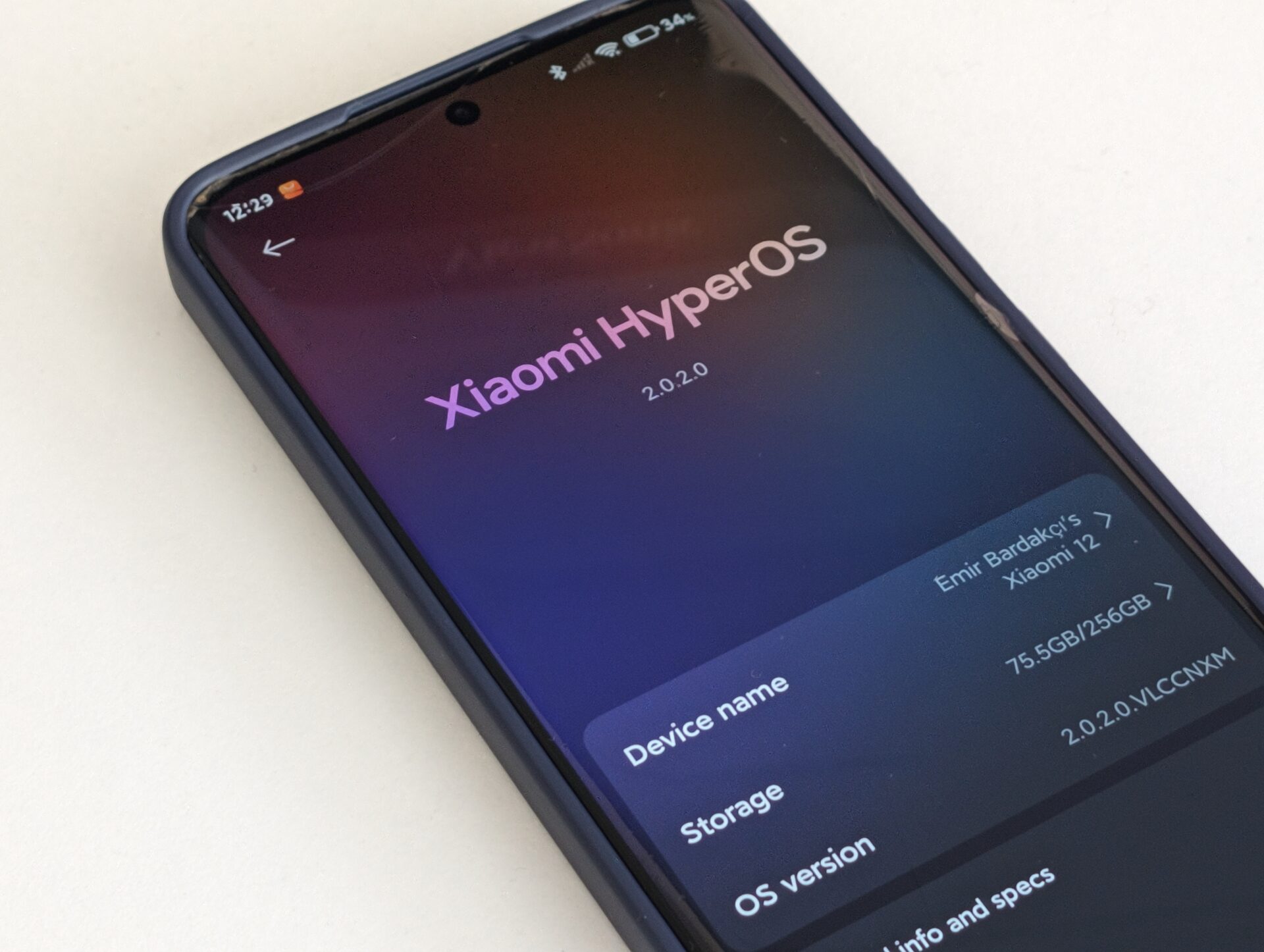
Xiaomi has remarkably reduced the performance and optimization gap between the HyperOS China and HyperOS Global editions. Compared to the previous generations of software, the China ROM provided better quality in terms of animation speed, memory management, and system response. Today, with the new builds of HyperOS, Xiaomi has aligned the core system optimizations of both versions, which places the Global ROM close in daily performance.
HyperOS Global Optimization Reaches China-Level Performance
Thus, with the recent system-level changes, Xiaomi has moved to unify China and Global builds in task scheduling, background process control, and animation pipelines. All these technical alignments reduce frame drops, improve battery efficiency, and stabilize thermal behavior under heavy workloads. The update strategy focuses on identical kernel-level tuning and memory compression technologies in both ROM types.
As a result, the real-world performance gaps for launching apps, multitasking, and gaming have shrunk. Global users now get access to better power management algorithms, improved storage I/O handling, and smarter scheduling of the CPU core without having to flash unofficial firmware.
No Practical Need for China ROM Anymore
Before HyperOS, many of the power users were installing China ROMs to get more stable system behaviors and earlier feature releases, but this meant that they had to install Google Mobile Services manually, removing Chinese system applications and operating in an English-only environment-a sequence of steps that added significantly to the complexity and potential instability.
Now, Xiaomi ships Global HyperOS with equivalent system-level optimizations. This gives users complete integration of Google services, compatibility with regional apps, and consistent performance without sacrificing usability or security. In this way, the Global ROM has become a practical choice for business and productivity users.
Now, Global HyperOS delivers an ideal blend of speed, stability, and compatibility. Xiaomi has unified animation frameworks, touch response calibration, and memory leak prevention mechanisms across both versions; hence, the consistent smoothness of scrolling, the faster wake-up times, and higher efficiency in standby.

FVCK UR HYPERS OS 3! KILLING EMULATORS!!
it ain’t even that serious, just don’t update then
version
HyperOS 3 has really become one of the best operating systems in the Android world and is rapidly advancing in the world of technology and artificial intelligence. I am very happy that every few months this operating system surprises me with a new feature.
Age is old every day… Experience is new every day…!! 📘👴✨
“power users” dont install google services – we delete them
it’s google GSF that causes poor battery life and enables security to be bypassed by “bad” apps
question: does anybody know if OS3 will still use googledialler, or will it finally be replaced with the superior xiaomi dialler in global builds?
It will make any compact only if they match features as well.
I need to update my cell phone
ydg re gusj
my tab still won’t open theme. it’s said don’t work on my region
bro it’s a new update, let’s just like wait and go give a feedback to xiaomi instead
https://technastic.com/xiaomi-bloatware-list-miui/
If anyone wants Xiaomi dailer change global rom to Indian Your problem solved 💪😄👌
Let’s leave the aesthetics out for a little bit. What about practicality? Xiaomi still needs to work on their RAM management. They don’t need to force close every app possible for the battery to last longer. I have a phone with 16 GB RAM and only 3-4 RAM are available. The phone was practically new. Like… who cares about the animations when the practicality is bad.
Why My phone is hyper Os Version 3 Update
My phone is Turbo 3
Can I turn it into universal rum without root now?
Or at least can I change the language to Arabic?
remove memeosenhacer asap!
the app tracking by this company is a potential security issue for you and all contacts in your phone, messenger, whatsapp.
It’s collecting information in your phone with 78 trackers.
searches name, phone number, contacts, adress, browser history, images, etc.
First post and last post.
Bye and good luck!