
Xiaomi is moving to the next level in its “Smart Factory” vision. On January 11, Xiaomi officially opened its fully automatic finished goods warehouse in its Xiaomi Smart Home Appliance Factory in Wuhan. It is not just a storage area. It is an intelligent hub where robots can handle production from the assembly line to the delivery van without sweating.
I have seen quite a number of logistics centers, and the extent of integration in this place is quite amazing. By combining the factory and the logistics system and running them as one integrated, efficient process, We are witnessing Xiaomi bridge the chasm in between the production and delivery stages for the customer.
TL;DR: The Power of Xiaomi’s New Warehouse
- Fully Automated: Uses AMR robots and RGV shuttles to handle the entire process from off-line to storage.
- Insane Speed: The system can process over 260 pallets per hour with a daily outbound capacity of 90,000 sets.
- Precision Quality: Millimeter-level precision quality inspection via an automated leak detection system.
- Faster Shipping: Specifically designed to bolster “next-day delivery” services for large appliances.
How Does Xiaomi’s Automated Logistics Work?
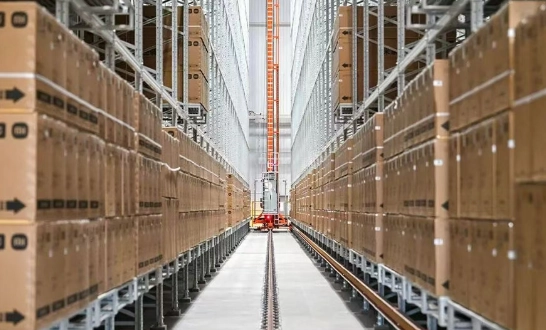
At the heart of the operation is its “factory-warehouse integration” strategy. Rather than having finished products shipped off to a warehouse location, items such as the Xiaomi Pad or smart air conditioners are shipped directly from the assembly line to a 24-meter-high automated warehouse.
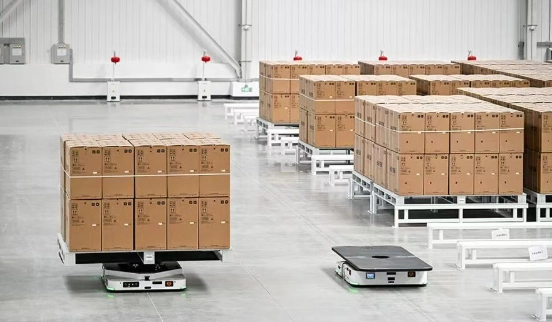
This facility uses AMR (Autonomous Mobile Robots) to move around the floor and RGV (Rail Guided Vehicle) shuttles that zoom through the corridors. The conveyor system with maximum efficiency guarantees that a product boxed will move for shipping in record time. Talking about 90,000 sets per day, this is the maximum that forms the basis of delivery goals set by the Chinese company, Xiaomi.
Is Quality Control Still Human-Led?
Well, not quite. Xiaomi has installed an auto leak detection system that offers millimeter-level accuracy. This means that all the smart gadgets that are manufactured are of the highest quality even before they are even handled by human beings.
Each and every component in this manufacturing process is managed by the “Xiaomi HyperOS Manufacturing Platform“. It ensures that there is a “capability of handling a volume of more than 260 pallets per hour,” thereby reducing all the “bottlenecks that normally exist in a typical warehouse“. It is a “lights-out” process, and the “machines do all the hard work“.
What This Means for You (The Consumer)
For the end consumer, this translates into one thing: speed. Through the optimization of its supply chain, Xiaomi is able to provide its customers with better next-day delivery options. Whether it is the latest air conditioner or the new Xiaomi Band that you are purchasing, the waiting time between clicking on the “buy” button and hearing the knock on your door is getting shorter.
What’s Next for Xiaomi Smart Manufacturing?
The Wuhan plant is “currently a benchmark in the industry.” But with its global expansion in the coming years, the other areas can also expect to see the rise of such factory-warehouse integration concepts. This is an integral part of its “People-Car-Home” vision—to ensure that even as the ecosystem advances, the capability to deliver these is still unbeatable.