


Devices debuting in China are featuring enormous battery capacities, but European models often fall short. For instance, the global release of the Xiaomi 17 to drop from a massive 7,000 mAh to roughly 6,330 mAh. If you are searching for exactly why Xiaomi Europe models have smaller capacity, it is not a design flaw—it is a direct result of strict international shipping regulations regarding dangerous goods.
The 20Wh Transportation Hurdle
Strict European transportation laws classify single battery cells over 20Wh as “dangerous goods,” forcing manufacturers to cap standard smartphone batteries at around 5,200 mAh to avoid logistical nightmares.
The core issue stems from the European accord on the “International Carriage of Dangerous Goods by Road” (ADR) and similar international aviation regulations. This legislation deems any single lithium-ion battery cell exceeding 20Wh as a hazardous material.
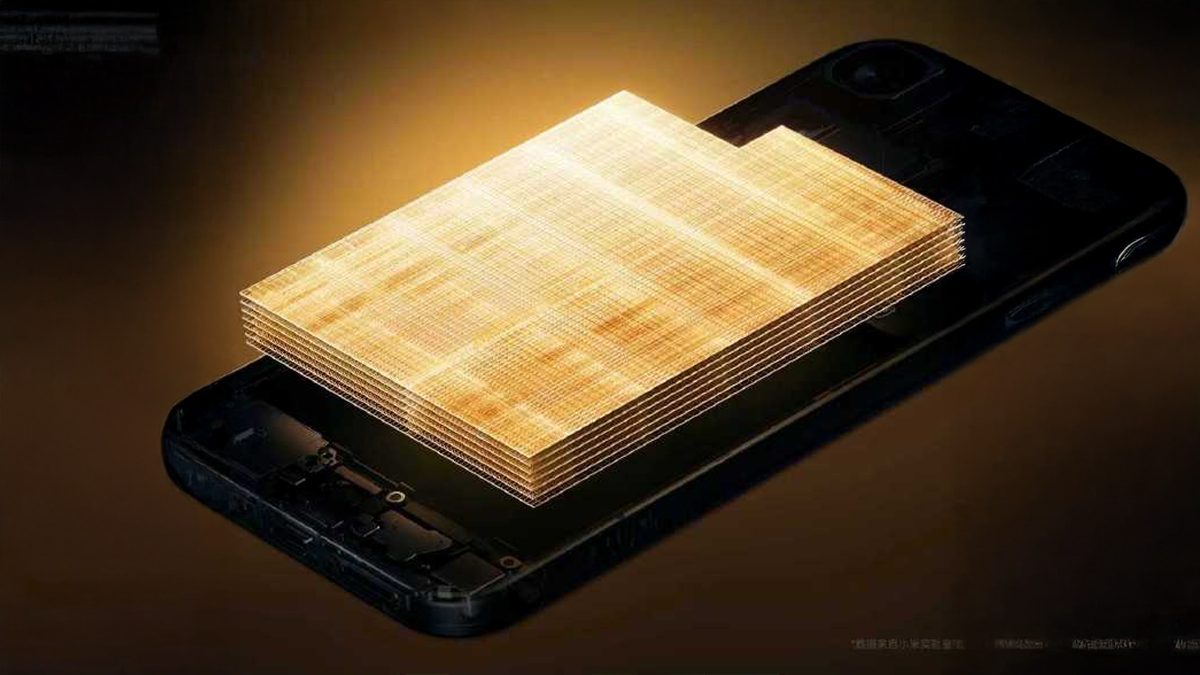
For a standard smartphone operating at typical voltages, the 20Wh cutoff translates to approximately 5,200 mAh. Shipping devices with single cells above this limit requires specialized logistics, significantly increasing costs and severely limiting the number of willing shipping carriers.
Consequently, importing a device with a non-compliant battery into Europe often results in incorrect customs declarations, making the shipment technically illegal and complicating future trade-ins or warranty repairs for the consumer.
Why Not Just Have Lots of Battery Cells?
While combining multiple smaller cells works for laptops, doing so in smartphones adds too much bulk, weight, and engineering complexity for the highly competitive mobile market.
A logical workaround to the 20Wh limit is a multi-cell battery configuration. As long as each individual cell stays under the 20Wh restriction, the combined total capacity can safely exceed the limit.
However, implementing a multi-cell strategy in smartphones introduces severe engineering difficulties. Multiple cells require additional internal packaging and complex charging circuitry, making the resulting device noticeably thicker and heavier. In a market where thin and lightweight designs dictate sales, creating a completely separate, bulkier internal architecture specifically for the European market is not financially viable for most smartphone makers.
What This Means for Future Xiaomi Phones
Until shipping regulations are modernized (potentially around 2027), European flagship phones will continue to feature smaller battery capacities than their Asian counterparts.
Rather than retooling the entire internal phone design, companies adapt to the 20Wh limit by thinning out the battery’s voltage or simply reducing the overall capacity for the European market. This regulatory hurdle explains why a phone marketed with a 6,000 mAh or 7,000 mAh battery in China will inevitably launch with a smaller capacity globally.
Industry leaders are lobbying for a revision to these outdated shipping limits to accommodate modern battery tech, but major legislative overhauls are not expected before 2027. Until a regulatory shift occurs, European users will have to rely on software optimization and fast-charging technologies to maximize battery life.



Intresting…..i knew of some parts of the battery issue for Europe from GSMARENA and Notbookceck but this post details more.
And yet we have electric vehicles moved and transported all over the planet and into Europe?
That’s why other brands sell phones with larger battery capacity in Europe than Xiaomi. It doesn’t hold up, Turk.
OnePlus 16 equipped with LPDDR6, UFS 4.1 storage, and an impressive 9,000 mAh battery, compatible with 120W fast charging
Europe.
So what Xiaomi is stating – companies like Oppo and OnePlus are superior because they can develop phones with same battery size as Chinese. Also Xiaomi do not care about safety of logistics personal because these rules were adopted after 3 deadly plain crashes caused by battery fire. I wandered what the next excuse will be as from December of 2025 most Asian countries will be adopting same rules due to multiple powerbank fires on plains.
Turco.
Are you still deleting my messages?
Obviously not in Europe, just China where it’s from.
Device: Redmi Note 14 5G
OS Version: HyperOS /3.04.0.WOQINXM
Android Version: /16 BP2A.250605.031.A3
Issue Description:
The camera performance on my Redmi Note 14 5G is not smooth.
There is noticeable lag and delay when opening the camera app
Photo capture and image processing are slow
Viewfinder shows frame drops while using the camera
The lag is more noticeable in low-light conditions
The same issue occurs in third-party apps like WhatsApp and Instagram camera
I have already tried clearing cache, restarting the device, and closing background apps, but the issue still persists.
Expected Behavior:
The camera should open smoothly, capture photos without lag, and process images faster.
Request:
Please optimize the camera performance and fix this issue in a future software update.