 Emir Bardakçı
The Golden Age of smartphone flagships and affordable upgrades is it, folks. A concerning report has revealed that the rapidly increasing memory costs are making smartphone manufacturers face a difficult decision: compromise on the display or make consumers pay a premium. If you were looking forward to a feature-rich smartphone with a top-notch display and massive storage, you might be out of luck. A report from Omdia has revealed a unique “perfect storm” where storage costs are directly affecting the display budgets of smartphone manufacturers.
TL;DR
- First Drop in Years: Global AMOLED smartphone panel shipments are projected to fall to 810 million in 2026, the first decline after three years of growth.
- Storage vs. Screen: The cost of memory chips is so high that it is now either equal to or greater than the cost of the display panel.
- AI is to Blame: The high demand for AI servers is consuming the supply of high-end storage chips.
- No Room to Move: Display panel makers have already lowered prices in 2025, and there is no room for further cost reductions in 2026.
Why Storage Prices Are Killing Screens
For the first time in years, we’re witnessing a regression in hardware shipments. Our latest research report, “Smartphone Display Market Insights,” reveals a bleak outlook for 2026. Mobile phone manufacturers are drastically cutting down their procurement plans for AMOLED panels.
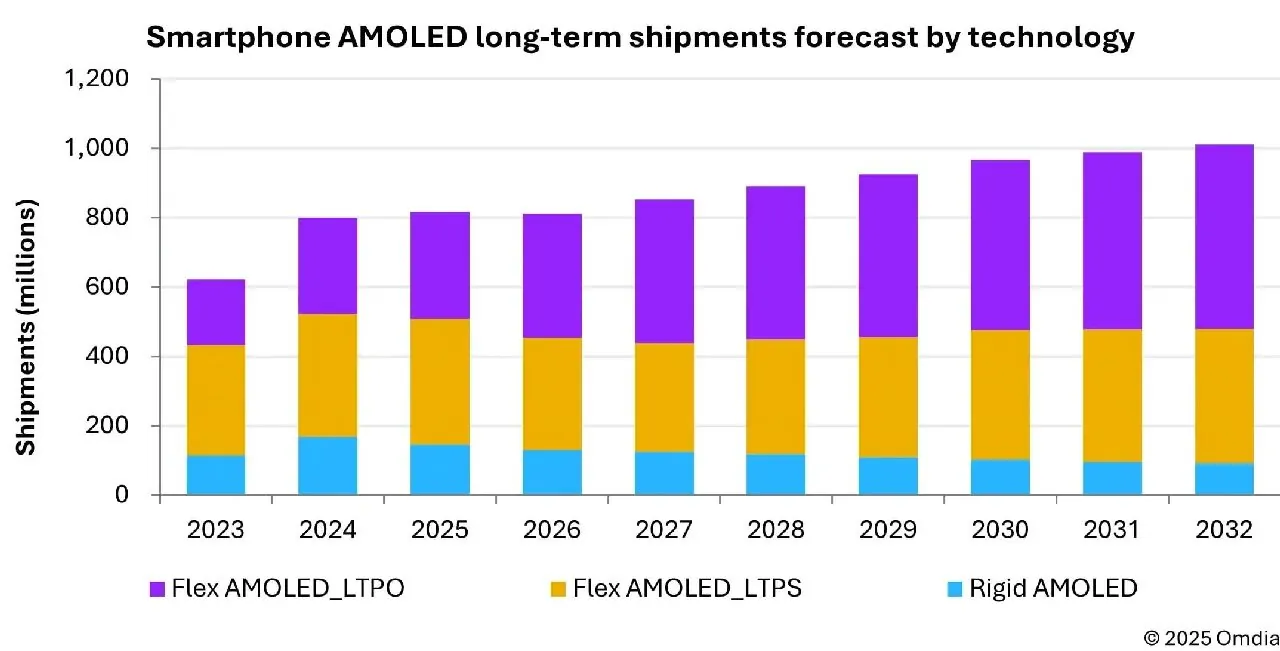
Why is this happening? Well, the math just doesn’t add up anymore. Memory (RAM and Storage) prices have gone through the roof and, in many cases, exceed the cost of the display assembly. You’re basically being given an option: either you get good storage or a good display. You don’t get both.
The “AI Tax” on Your Phone
But why is this happening? Well, it’s not just inflation; it’s just that Artificial Intelligence has suddenly exploded. AI Servers need an insane amount of high-speed, high-margin storage. Chipmakers are giving precedence to these high-margin deals over consumer electronics.
As such, the flash memory used in your potential POCO F8 or Xiaomi 16T is becoming scarce and expensive. So, it’s no surprise that the ‘mid-range flagship’ category is affected the most. This category relies on offering premium specs without breaking the bank.
Economic Pressures & What It Means for You
It’s not just tech; it’s macro-economics. According to our report, it’s also because of geopolitical tensions and an appreciating US dollar that investors are pouring money into commodities such as copper and semiconductors. This ‘imported inflation’ trickles down to your pocket.
We expect two things to happen as a result:
- Downgrading Displays: Manufacturers will opt for older-generation AMOLED panels instead of LTPO panels.
- Cutting Storage: Providing 256GB as the best option for affordable flagships, making 512GB and 1TB storage a luxury option.
What’s Next?
If you are currently using a device with 512GB or 1TB of storage, then it is recommended to hold on to the device. The market is showing a clear indication that the cost of purchasing a similar device in 2026 will be higher. The best option is to look for cloud storage subscriptions, which might be heavily promoted in the future. The best option is to buy current-generation flagships such as the Xiaomi 15 series or similar devices in other countries before the new pricing is introduced in 2026.