


For years, a frustrating “capacity gap” existed in the smartphone world. While Chinese consumers enjoyed Redmi K-series and Turbo-series devices with massive 6,000mAh+ cells, the Global and European markets were often restricted to standard 5,000mAh units. This was largely due to stringent EU safety regulations and shipping certifications regarding high-density lithium-ion transport.
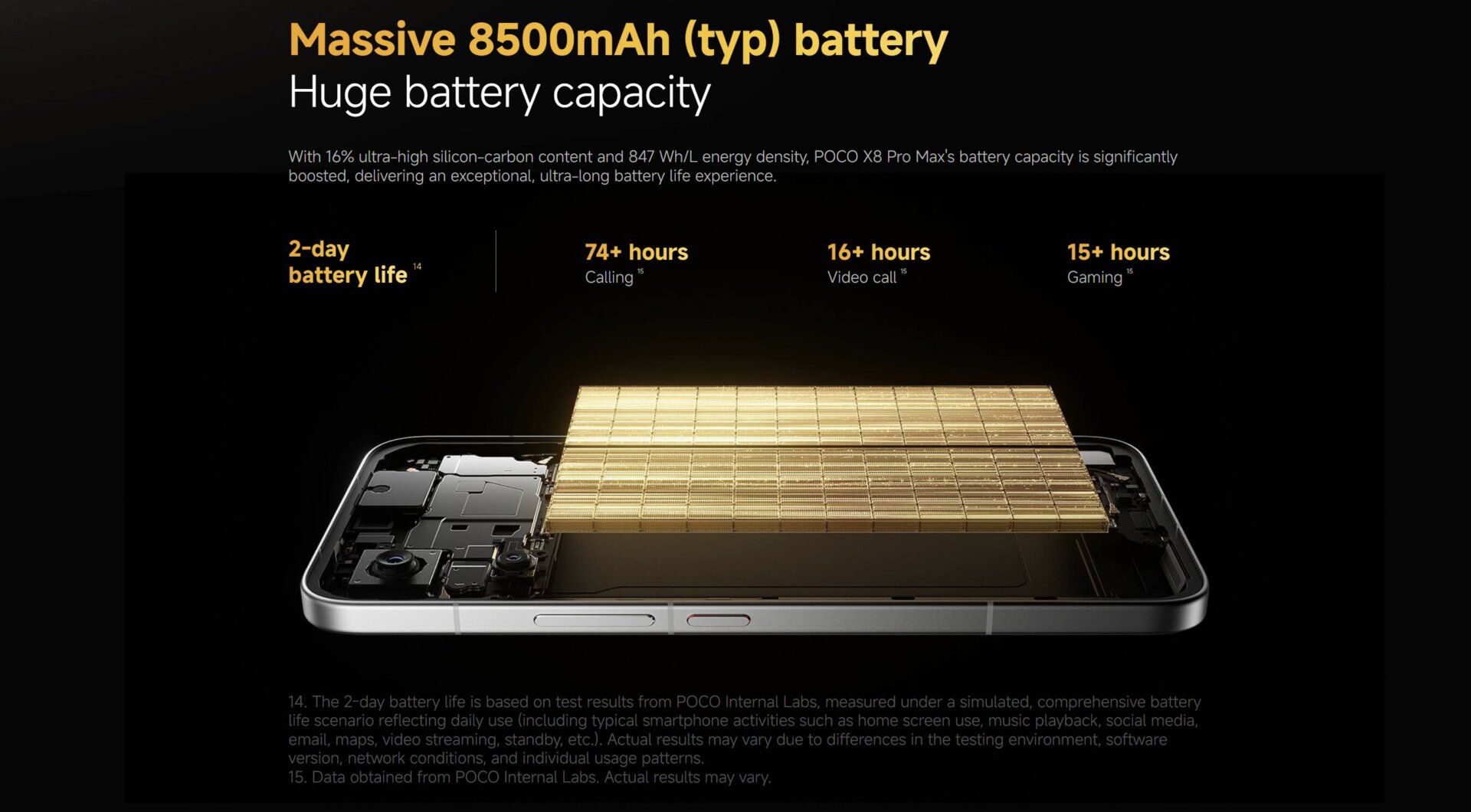
However, the tide has turned. With the launch of the POCO X8 Pro Max, Xiaomi is officially bringing “Powerbank-level” endurance to the global stage, proving that the era of the one-day battery is over.
From China-Exclusive to Global Dominance
Previously, massive batteries were a luxury of the Chinese domestic market. High-capacity “Extreme Edition” models stayed within borders, while Western users dealt with slimmer profiles and more frequent charging. The primary hurdle was the EU’s strict regulatory framework regarding battery stability and recyclability, which forced manufacturers to play it safe with smaller, proven cell architectures.
Xiaomi has successfully navigated these hurdles by evolving its Silicon-Carbon (Si-C) technology. This advancement allows for higher energy density without the volatile footprint of traditional cobalt-based batteries.
The 9,000mAh Threshold: India leads the Charge
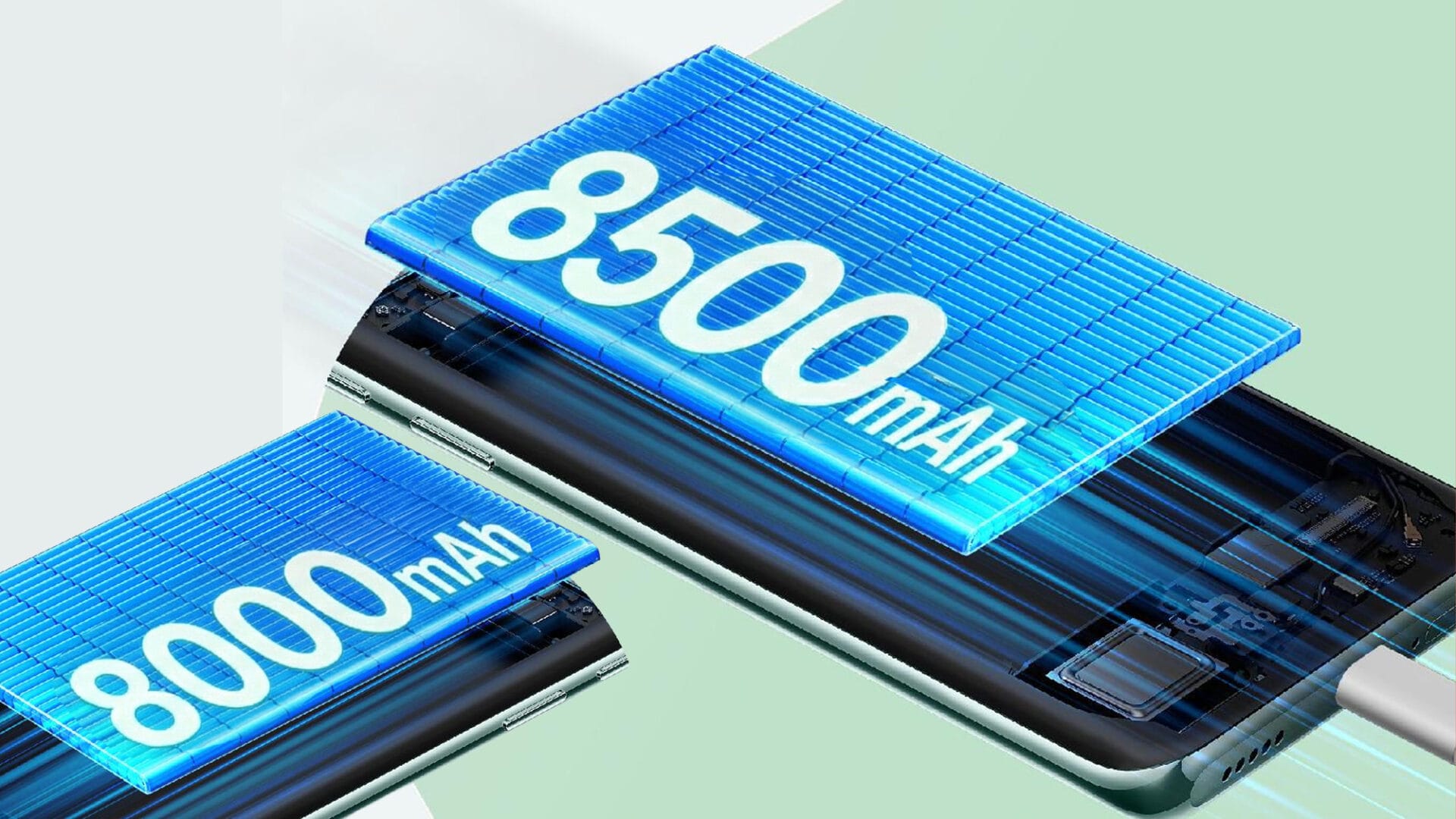
While the global version of the POCO X8 Pro Max settles at a monstrous 8,500mAh, the Indian variant has officially crossed the threshold into the 9,000mAh territory. This marks the first time a mainstream flagship-killer has offered a capacity traditionally reserved for tablets or dedicated external powerbanks.
Technical Core: Powerbank Specs, Smartphone Form Factor
The POCO X8 Pro Max is essentially a powerbank that happens to run Xiaomi HyperOS 3. By integrating the MediaTek Dimensity 9500s, Xiaomi ensures that this massive reservoir of energy isn’t wasted by an inefficient processor.
-
Silicon-Carbon Alchemy: By replacing traditional graphite anodes with Silicon-Carbon, Xiaomi achieved a 20% increase in density. This is why the X8 Pro Max doesn’t feel like a “brick,” despite having nearly double the capacity of an iPhone or a standard Galaxy.
-
The 6-Year Promise: To address EU longevity concerns, the battery maintains 80% health after 1,600 cycles. This 6-year lifespan turns the phone into a long-term investment rather than a disposable gadget.
-
100W HyperCharge: Charging a 9,000mAh battery via a standard USB port would take hours; however, the 100W wired charging ensures the device is ready for a full day of use in less than 20 minutes.
Market Impact and Device Alignment
The transition from the Redmi Turbo 5 Max (launched in China for approximately $345 USD) to the POCO X8 Pro Max represents a shift in Xiaomi’s global hierarchy.
| Model | Market | Battery Capacity | Processor |
| Redmi Turbo 5 Max | China (Exclusive) | 9,000 mAh | Dimensity 9500s |
| POCO X8 Pro Max | India | 9,000 mAh | Dimensity 9500s |
| POCO X8 Pro Max | Global / EU | 8,500 mAh | Dimensity 9500s |
Conclusion: The Death of the Powerbank?
Xiaomi’s strategy is clear: by leveraging HyperOS 3 and next-gen hardware, they are making the external powerbank obsolete for the average traveler. The POCO X8 Pro Max is the vanguard of this movement, bringing high-capacity tech that was once “trapped” in China to the rest of the world.



