


The upcoming Global variants of the POCO X8 Pro and POCO X8 Pro Max will launch with battery capacities of 6500mAh and 8550mAh, respectively. These figures represent a confirmed reduction from their Chinese counterparts, the Redmi Turbo 5 (7560mAh) and Redmi Turbo 5 Max (9000mAh). This hardware deviation is not a marketing decision but a direct requirement to adhere to mandatory EU Battery Regulations and strict IEC safety standards regarding thermal runaway protection in high-density Silicon-Carbon cells.
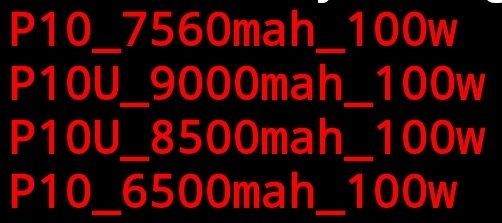
Technical Specification Comparison
The following table outlines the hardware divergence between the Global (EU/IEC Compliant) and China (High-Density) models based on finalized supply chain data.
| Feature | POCO X8 Pro (Global) | Redmi Turbo 5 (China) | POCO X8 Pro Max (Global) | Redmi Turbo 5 Max (China) |
| Battery Capacity | 6500mAh | 7560mAh | 8550mAh | 9000mAh |
| Cell Technology | Standard Li-ion/Si-C | High-Density Si/C | Standard Li-ion/Si-C | High-Density Si/C |
| Charging | 100W Wired | 100W Wired | 100W Wired | 100W Wired |
| Processor | Dimensity 8500-Ultra | Dimensity 8500-Ultra | Dimensity 9500s | Dimensity 9500s |
| Display | 6.59″ 1.5K AMOLED | 6.59″ 1.5K AMOLED | 6.83″ 2K AMOLED | 6.83″ 2K AMOLED |
| OS | Xiaomi HyperOS 3 | Xiaomi HyperOS 3 | Xiaomi HyperOS 3 | Xiaomi HyperOS 3 |
Regulatory & Technical Analysis
The reduction in capacity for the Global market results from the differing safety certifications between regions. The Chinese variants utilize aggressive Silicon-Carbon (Si/C) anode technology, which allows for 7560mAh and 9000mAh capacities within standard chassis dimensions.
However, strict IEC 62133 standards and EU directives impose rigorous limitations on internal cell pressure and thermal expansion buffers. To meet these safety certifications for Global export, the active material density in the battery cells is reduced. This increases the safety margin for thermal regulation but decreases total energy density. Xiaomi HyperOS 3 mitigates this hardware deficit through advanced power scheduling and Xiaomi HyperConnect optimization, maintaining consistent runtime despite the reduced milliampere-hour (mAh) count.



