 Emir Bardakçı
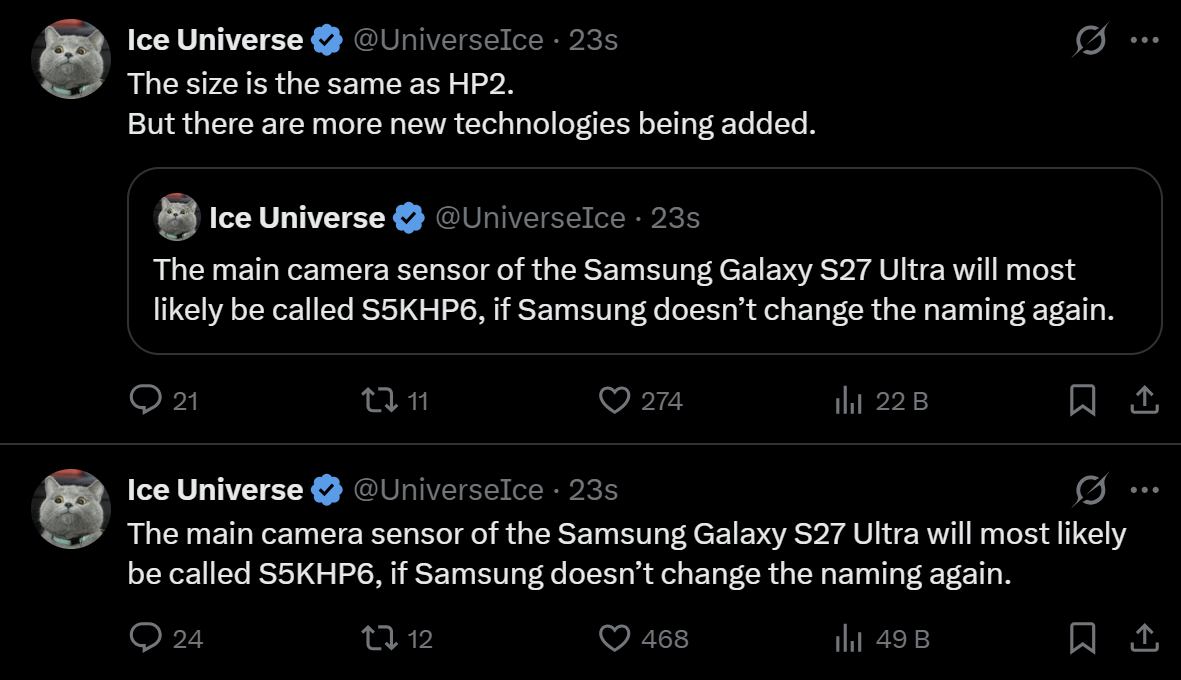
Thanks to the information that has surfaced from the supply chain and top-tier leak sources such as UniverseIce, we finally have the information on what Samsung has up its sleeve for the 2027 flagships. Although fans were expecting something enormous with the 1-inch sensor to go head-to-head with the best of the Chinese offerings, the Samsung Galaxy S27 Ultra seems to have other plans on the table with the ISOCELL S5KHP6 sensor.
As we have seen with Samsung and its 200MP branding in the past few years, this is Samsung doubling down on its computational prowess and not necessarily its physical capabilities. As Samsung is going with the same strength and familiar size, I believe that the company is claiming that its image processing capabilities combined with the power of the Snapdragon 8 Elite will suffice.
TL;DR: Samsung’s 200MP Strategy for
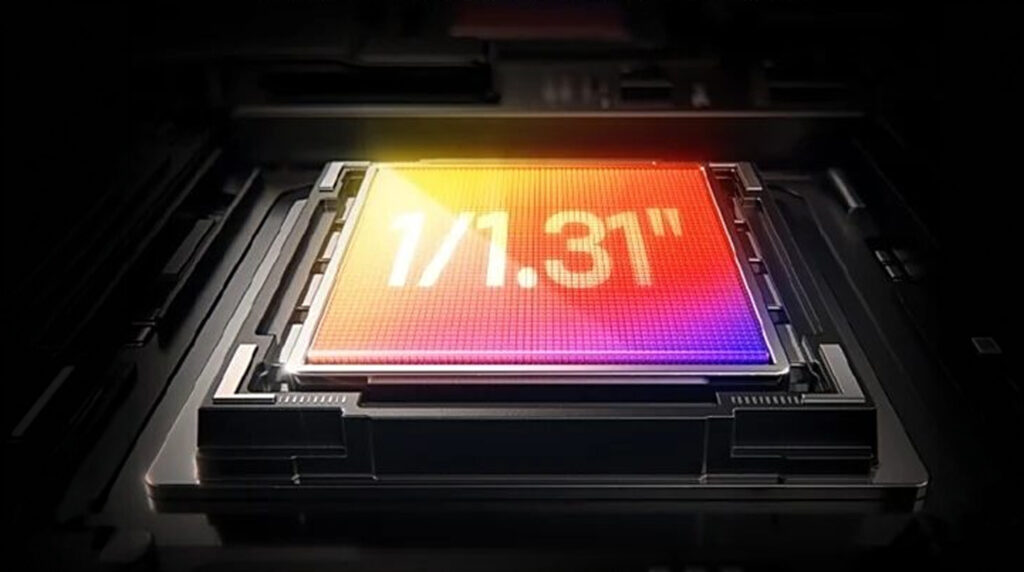
- The Galaxy S27 Ultra will likely debut the ISOCELL HP6, a 200MP sensor with a 1/1.3-inch format.
- Despite rumors of a switch to Sony’s 1-inch hardware, Samsung is sticking to its in-house “evolutionary” sensor to manage costs.
- Expect major leaps in HDR processing, 8K video performance, and noise reduction rather than a hardware size increase.
- The Xiaomi 17 Ultra is already putting pressure on Samsung by utilizing the 200MP Samsung HPE sensor for its telephoto lens.
Why isn’t Samsung going bigger with the HP6?
For the past several generations, from the Galaxy S23 Ultra onwards, Samsung has been using a 1/1.3-inch sensor size. It was expected that the Galaxy S27 Ultra would end this tradition and come equipped with a massive 1-inch or 1.12-inch sensor, possibly Sony LYT-901.
However, it appears that some rumors leaked that they’ve scrapped this line of thought because of production costs. Thus, instead, there is going to be “‘Internal Excellence’ for ISOCELL HP6, featuring enhanced D-VTG (Dual Vertical Transfer Gate) technology and pixel binning for maximizing image quality in the limited area they currently fit in.
The Xiaomi 17 Ultra Factor
Though Samsung’s strategy for its primary sensor remains conservative, its rivals are getting bolder about Samsung’s own technology. The latest offering, Xiaomi 17 Ultra, has raised eyebrows for sporting a 200MP Samsung HPE sensor solely for its periscope telephoto camera.
This is an odd situation where the zoom feature is handled by Samsung’s high-res camera tech in the case of the Xiaomi phones, and the same tech is employed in the main wide-angle setup of a Samsung phone. What we can expect is that the Xiaomi 17 Ultra will come out as a tough rival in the “Ultra” segment during 2026 and 2027.
Xiaomi HyperOS and System Integration
As such devices continue to break new ground in the area of mobile camera capabilities, it is in software optimization that the real fight ensues. The Samsung One UI interface will be pitted against the fully modular Xiaomi HyperOS, which is behind the new Xiaomi Pad 7 and the XRING O1 series of ecosystem devices.
What next for the Ultra series?
While the primary camera size is the same, it seems the Galaxy S27 Ultra is not ignoring the rest of the camera system. We are following reports of a 50MP Ultra Wide camera and a possible update to the 32MP front camera (Sony IMX series) to replace the aging 12MP camera. Moreover, the chipset will not only power the high-quality cameras but will also serve as the “brain” that will process the high data transfer coming from 200MP cameras. But if Samsung manages this AI noise-reduction aspect, then perhaps the S27 Ultra will still be the top point-and-shoot smartphone with a sensor that doesn’t measure 1 inch.