 Emir Bardakçı
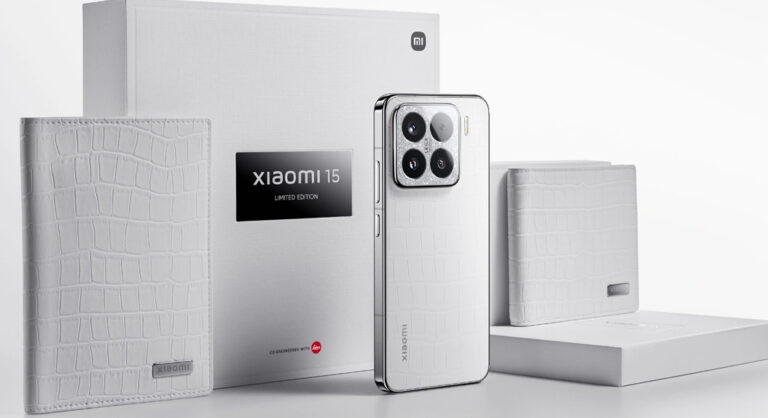
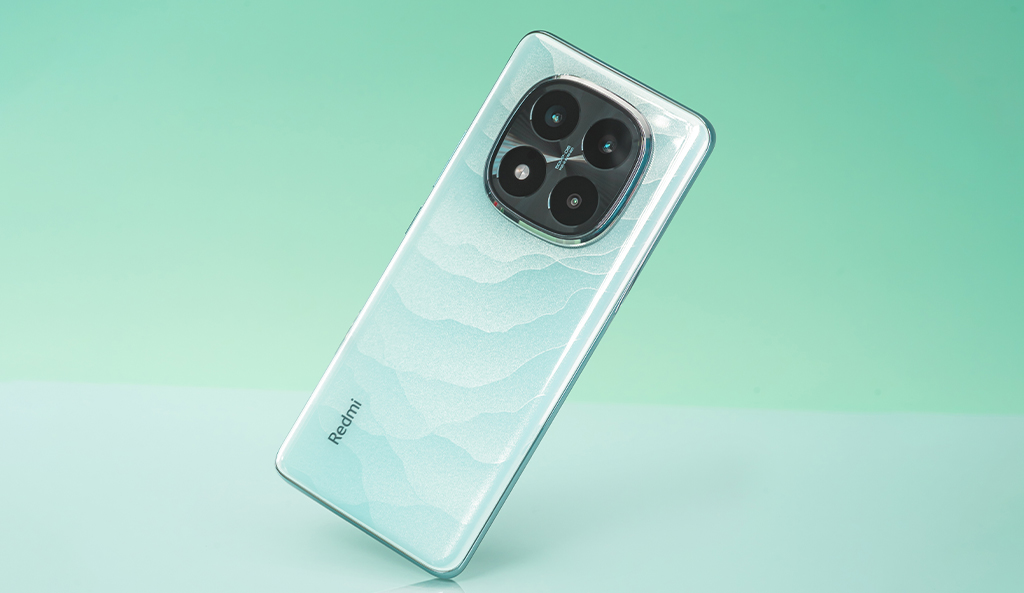
Current trends in supply chain news show a growing influence of higher memory cost on product lines in various segments offered by Xiaomi. As per latest news in the industry, some of these available tablets from the brand have undergone pricing revisions, with future mid-range smartphones being influenced in storage capacity.
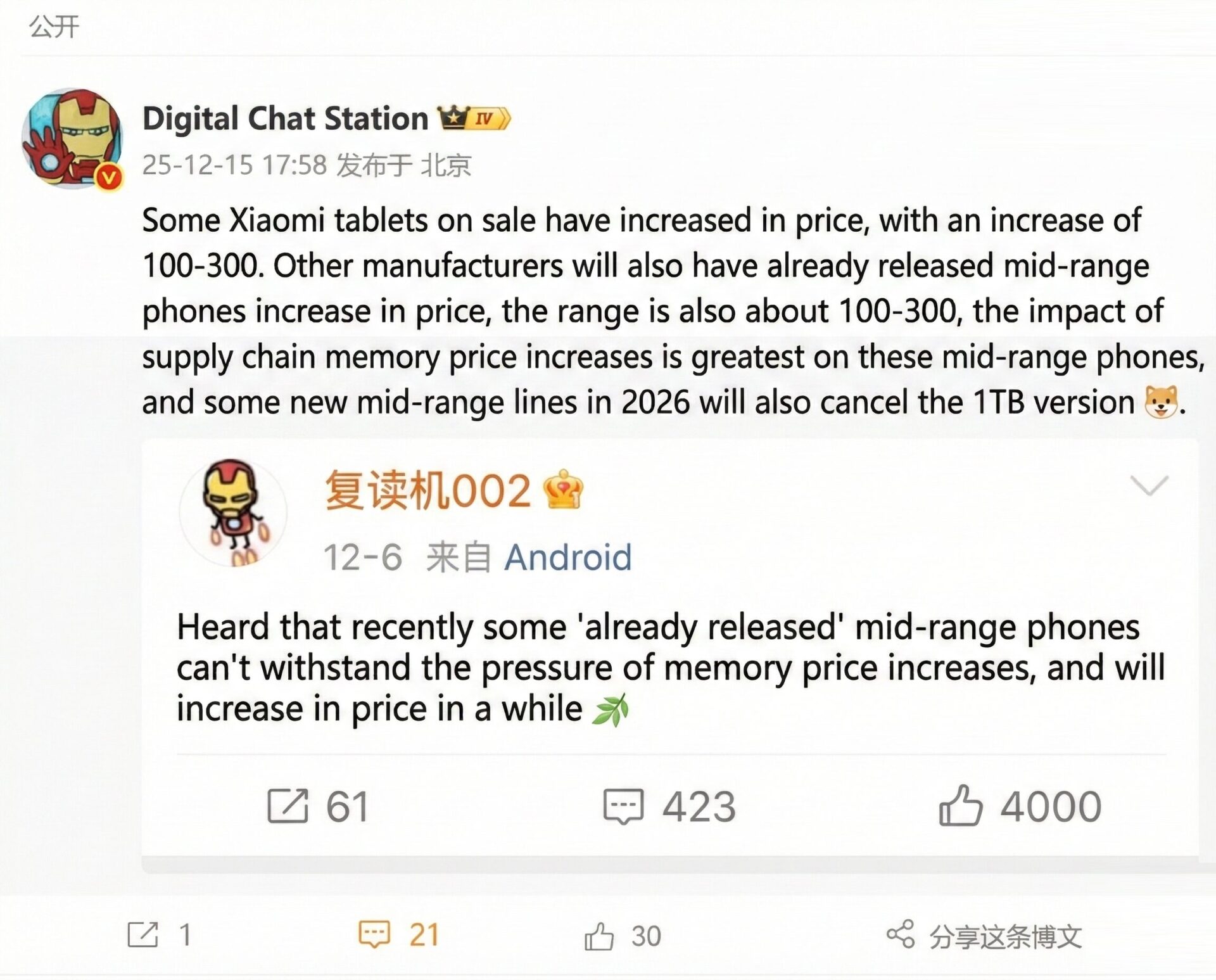
According to industry blogger Digital Chat Station, some of the Xiaomi-brand tablets have seen a price hike of 100-300 Chinese yuan, which will translate to 14-42 USD when converted to other currencies. This move by the Chinese manufacturer can be attributed to an increase in memory component prices. The prices will most definitely affect tablets in the mid-range segment.
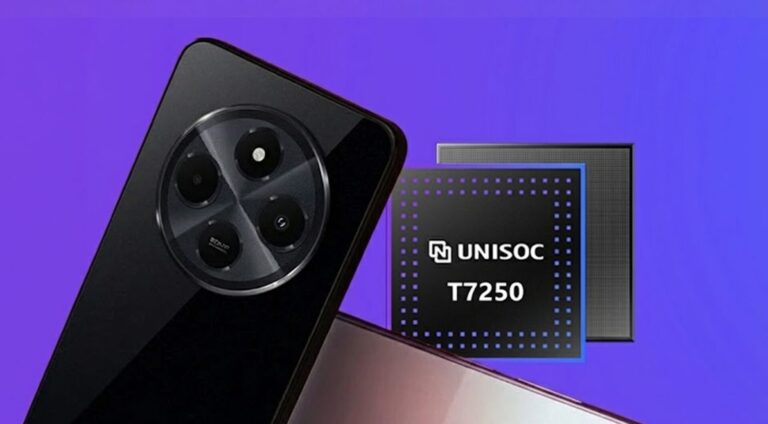
The price hike in memory chips is not confined to Xiaomi. Other smartphone brands are also reportedly set to make a similar change in existing mid-range devices with a price hike in a 14-42 USD bracket. The memory chips such as LPDDR and NAND have become an important part of the cost of materials of an Android smartphone, especially in a segment where higher storage and RAM capacity become a major specification factor.
Rising memory costs will push vendors to rebalances product specs and pricing. For a company such as Xiaomi, which historically launched devices with very aggressive specs at competitive pricing, this trend will call for careful consideration.
1TB Storage May Disappear From Mid-Range Models
One of the most evident implications of these cost considerations is a rumored adjustment in future product lines. Reports have emerged that some new mid-range smartphones expected in 2026 will stop production of 1TB storage models altogether. Although flagship phones are set to support higher storage variants, mid-rangers can expect to see well-rounded variants to keep prices under control.
Such an approach will complement Xiaomi’s strategy of optimizing their hardware offerings in a manner which will allow sustainability in whatever product segment they are in. As a consequence, consumers can expect less ultra-high storage capacity in mid-segment phones but a stable pricing structure in basic variants.
Industry Outlook Indicates Further Changes Ahead
Recently, a market analysis conducted by TrendForce showcased a key point in which expectations of increased memory prices in early 2026 are further increasing pressure on smartphone, tablet, and laptop brands. Therefore, brands will adjust their pricing strategies and redefine specifications in budget segments. Resource superiority will remain with leading brands boasting better supply chain capabilities.
For Xiaomi, these developments indicate a time of readjusting rather than disruption. The pricing and storage shifts in their tablets are simply a part of an industry-wide trend. However, consumers can still update their system apps using HyperOSUpdates.com, or through the MemeOS Enhancer application offered in Google Play Store, which will give them access to hidden functions in their Xiaomi device and system update capabilities.