


The global consumer electronics market is seeing a radical technological transformation in the 2024 and 2025 fiscal years, and specifically in the portable audio vertical. Xiaomi, meanwhile, is aggressively expanding its presence in the audio segment with its “Human x Car x Home” ecosystem strategy. This report offers a comprehensive analysis of three critical Bluetooth speaker models-Xiaomi Sound Pocket, Xiaomi Sound Outdoor (30W), and the flagship Xiaomi Bluetooth Speaker (40W)-all targeting that insatiable consumer demand for “affordable excellence.” These devices show that Xiaomi has moved beyond merely being a budget alternative and into challenging legacy brands on computational audio, proprietary integrations like Xiaomi HyperConnect, and acoustic partnerships.
Global Audio Market Context and Technological Paradigm Shift
The Rise of Computational Audio and Algorithmic Acoustics
Until recently, in traditional audio engineering, a speaker’s performance was largely bound by physical parameters: driver size, cabinet volume, and magnet weight. However, since 2025, the industry has moved into the age of “computational audio.” In this respect, Xiaomi has taken the lead with its self-developed algorithms. The new generation of speakers from the brand uses digital signal processing technologies that do not simply amplify sound but refine the audio signal at every step from source to play.
This technology really stretches the laws of physics, especially on small form-factor devices. A process called “Dynamic Tuning” adjusts the frequency response in real-time, depending on volume levels: for example, at low volumes, it automatically boosts bass and treble frequencies since the human ear is less sensitive to them (the Fletcher-Munson curve). This is essentially the mechanism that allows many of Xiaomi’s inexpensive models to present fullness of sound unexpected for their dimensions.
Connectivity Revolution: Bluetooth 5.4 and HyperOS Ecosystem
Probably the most significant competitive advantage Xiaomi can offer on the global market is designing audio devices not as an isolated product but as a node in the expanding IoT network. The Xiaomi HyperConnect architecture grants seamless communication between speakers, smartphones, tablets, and even Xiaomi-branded electric vehicles.
One good example of this is the inclusion of NFC. Instead of fiddling with complicated Bluetooth menus, users can tap their HyperOS-enabled phones against the speaker and pair them instantly. Additionally, the adoption of the Bluetooth 5.4 standard-even on budget-friendly models-is a critical detail. For one, Bluetooth 5.4 operates much more efficiently in terms of power management while providing even lower latency and much better stability in crowded signal spaces than earlier versions.
1. Xiaomi Sound Pocket (Entry Level)
Ultra-Portable / Budget-Friendly/ Young people, travelers, podcast listeners, and minimalists.
Design Philosophy and the “Alive” Concept
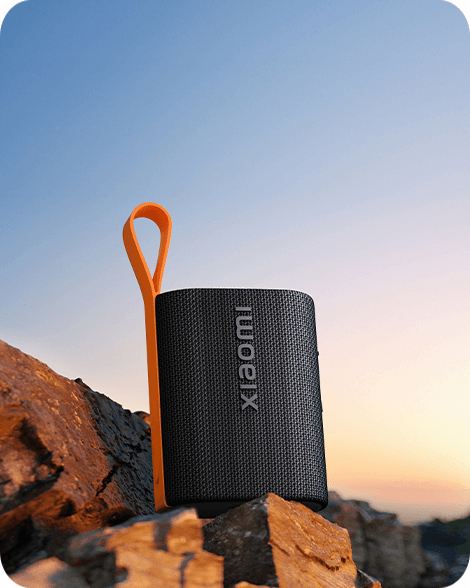
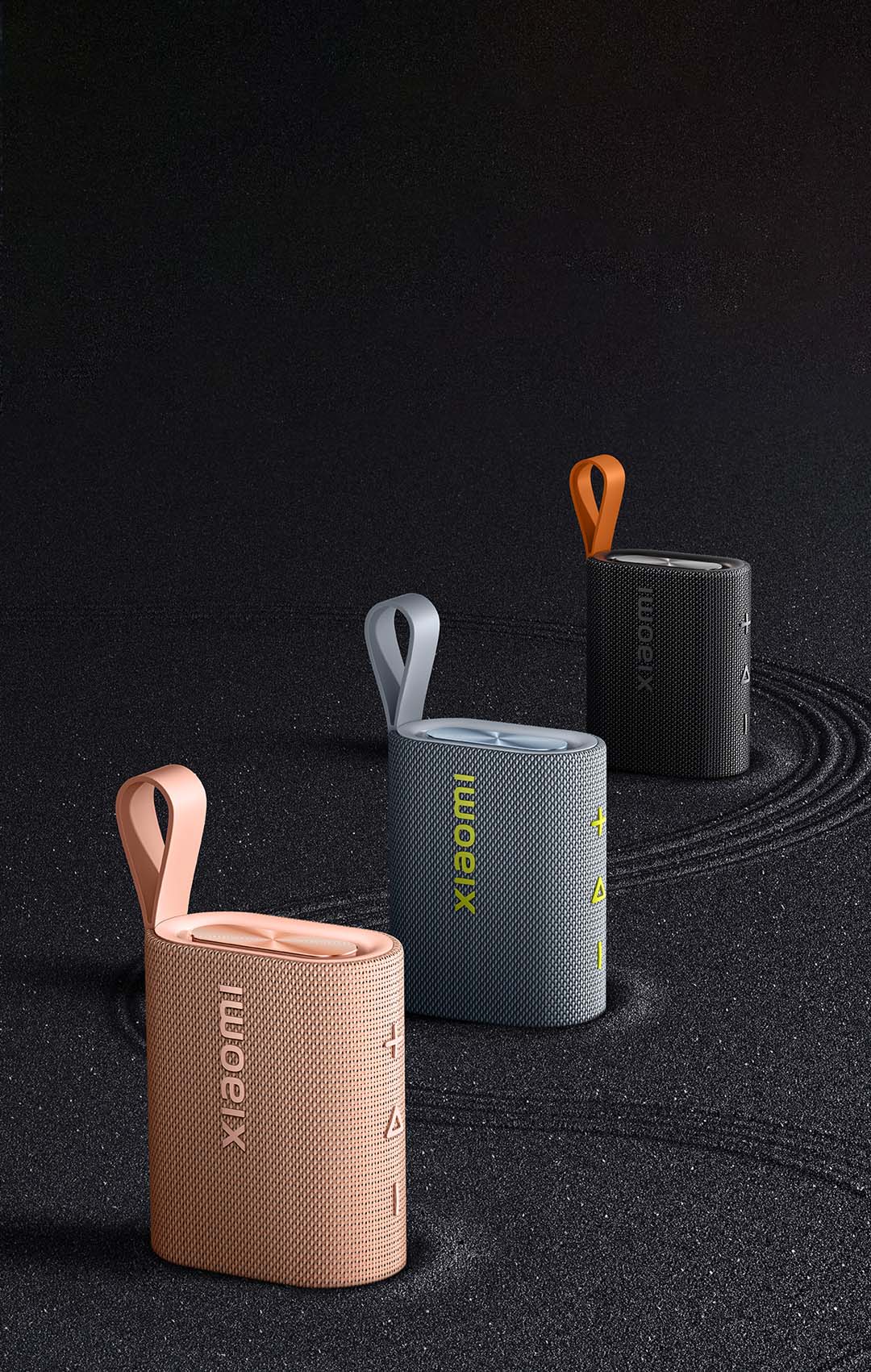
The Xiaomi Sound Pocket is compact, with organic lines that represent the company’s “Alive” design. Given that it weighs some 200 grams, the device has the same mass as a regular smartphone or a small bottle of coffee, and it could easily be put into any bag or pocket. The design solution will allow the device to be used in two modes: horizontal and vertical. The large mesh design ensures unobstructed propagation of sound waves, while IP67 certification guarantees complete protection against dust and water immersion.
Acoustic Architecture: Breaking Physical Limits
The most striking engineering achievement of the Sound Pocket is the bass performance it can achieve, despite a rated output power of 5W. While the latter sounds low on paper, Xiaomi’s “Dynamic Woofer Extension” technology allows the driver to push the limits of physical space down to surprisingly low frequencies.
- Driver Configuration: Comprises one full-range driver and a passive radiator.
- Frequency Response: Provides a response between 100Hz and 20KHz. While it is physically impossible for a device of this size to produce sub-bass below 100Hz, DSP algorithms synthesize psychoacoustic bass harmonics to create the illusion of deeper bass.
Battery Life and Market Position
The device has a 1000mAh, 3.7V lithium-ion battery. Xiaomi claims this provides up to 10 hours of playback at 40% volume. In the global market, finding the Sound Pocket in the range of $15-$25 USD places it squarely as a competitor to the JBL Go 4. Given that the JBL Go 4 usually sells for $40-50 USD, Xiaomi provides comparable performance and newer connectivity (BT 5.4) for half the price.
2. Xiaomi Sound Outdoor 30W (Price/Performance Leader)
Outdoorsmen, campers, and audiophiles on a budget. Mid-Range / High-Performance Portable
Engineering Marvel: Two-Way Driver Design
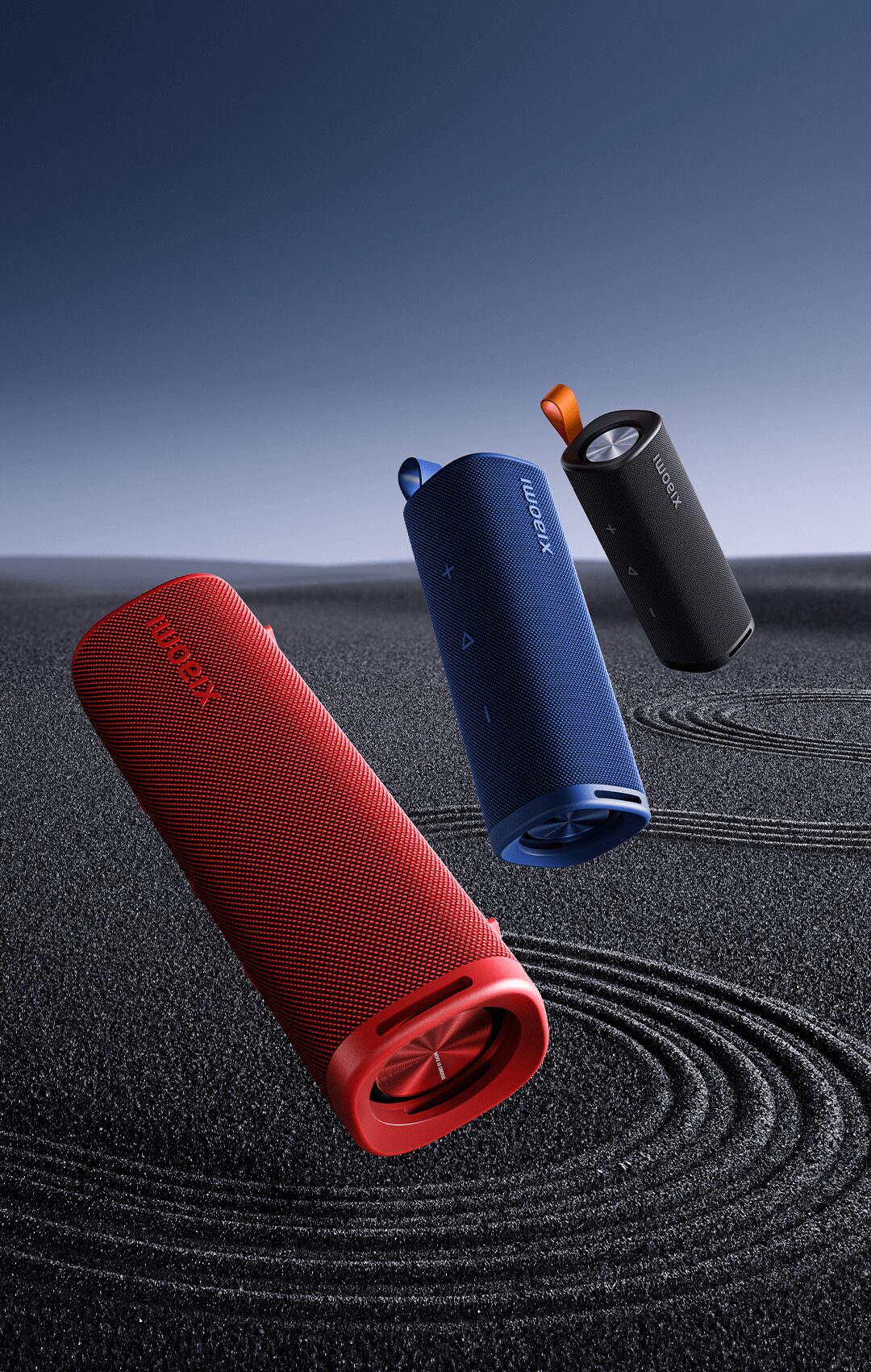
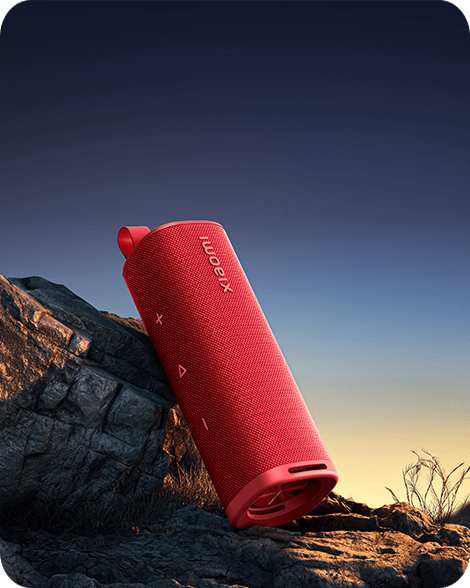
The Xiaomi Sound Outdoor 30W is their most strategic product because it features a two-way speaker architecture usually seen only in premium speakers costing more than $100 USD.
Driver Separation
The total power of 30W is divided into a 20W woofer for bass and mids and a 10W tweeter for the highs. On single-driver speakers, such as the older JBL Flip 5, the same membrane has to produce everything from powerful bass kicks to high-frequency cymbals, which can only result in intermodulation distortion. By isolating the tweeter, Xiaomi ensures that vocals remain crystal clear no matter how hard the bass hits it.
Power Management and Battery Architecture
One important, often overlooked feature of the Sound Outdoor is its battery voltage: though the device has a 2600mAh battery, it works at 7.2V. A regular power bank and phone battery operate at 3.6V/3.7V. For 7.2V, the energy capacity would be equal to a 5200mAh battery at standard voltage. This high voltage enables the amplifier to work more efficiently with higher volumes, reducing distortion and heating. It supports up to 12 hours at 50% volume and fully charges in 2.5 hours via 15W fast charging.
Connectivity and “Party” Mode
Built on Bluetooth 5.4 infrastructure, the strong suit of this model is scalability: users can link up to 100 Sound Outdoor units to create a massive synchronized audio system. Furthermore, pairing two units creates a true stereo setup (TWS) with a total power of 60W, offering a soundstage wider than a single large JBL Xtreme model.
3. Xiaomi Bluetooth Speaker 40W (Flagship)
Listeners oriented towards audio quality, home theater integration, and technology-savvy users. Premium / Audiophile Level.
360-Degree Acoustic Architecture
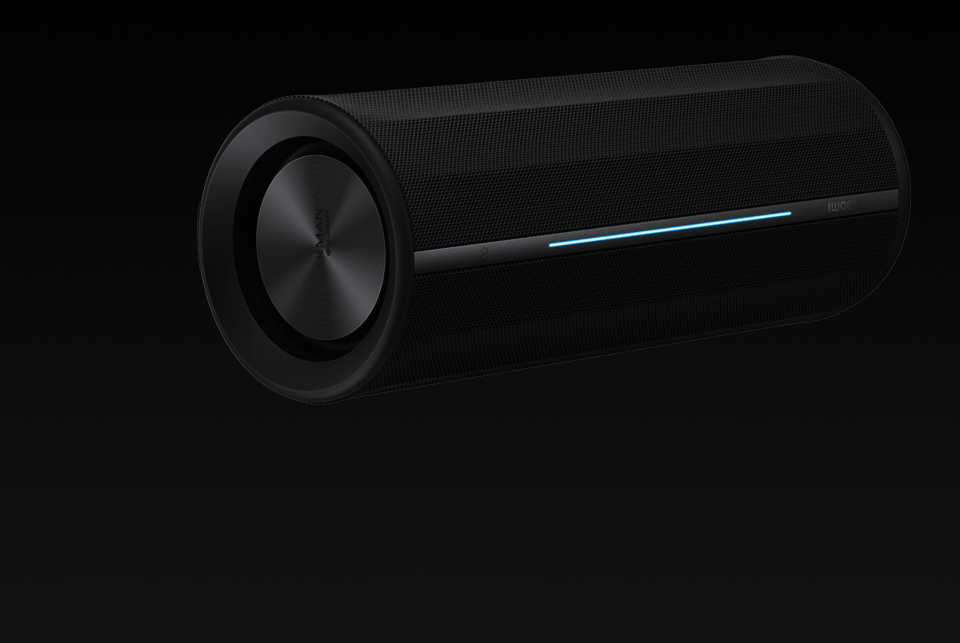
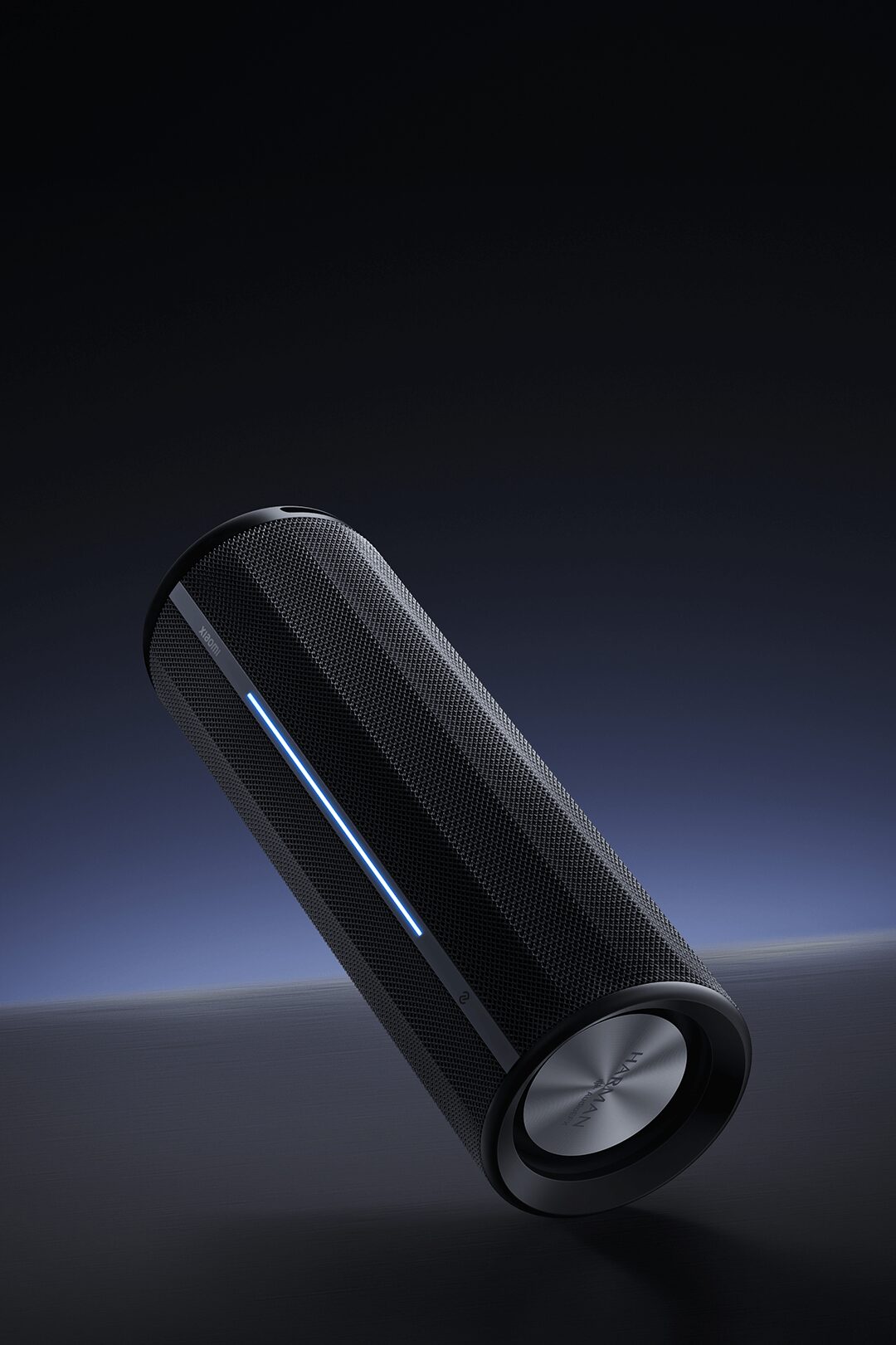
Simply named “Xiaomi Bluetooth Speaker” (40W version), this model represents the top of the series. It hosts a 5-unit acoustic configuration:
- Dual Tweeters (10W x 2): For high frequencies.
- Mid-Low Frequency Woofer (20W x 1): Racetrack-shaped driver for vocals and rhythm.
- Dual Passive Radiators: For deep bass response.
This setup is engineered to deliver 360-degree omnidirectional sound, so whoever is in the room will get the same quality no matter how the speaker is oriented.
Harman AudioEFX and Audiophile Codec Support
But perhaps most importantly, it is professionally tuned by HARMAN AudioEFX. It is because of this collaboration that the speaker outputs a well-balanced and “musical” sound signature, rather than just noise. Most importantly, the device supports LHDC 5.0 (Low Latency High-Definition Audio Codec). While regular Bluetooth transfers data at 328 kbps, LHDC 5.0 allows for 900-1000 kbps. This enables the wireless transmission of Hi-Res audio (24-bit/96kHz) without loss of detail—a feature seen on $200+ Sony (LDAC) devices.
Performance and Price
| Feature | Xiaomi Sound Pocket | Xiaomi Sound Outdoor (30W) | Xiaomi Bluetooth Speaker (40W) |
| Best Use Case | Personal / Travel | Camping / Beach / Value | Home / Party / Hi-Fi |
| Output Power | 5W | 30W (20W Woofer + 10W Tweeter) | 40W (3 Active Units) |
| Acoustic Structure | 1 Active + 1 Passive | 2 Active + 2 Passive | 3 Active + 2 Passive |
| Sound Direction | Directional | Directional | 360° Omnidirectional |
| Bluetooth Version | 5.4 | 5.4 | 5.3 (LHDC 5.0 Support) |
| Battery Life | 10 Hours (40% Vol) | 12 Hours (50% Vol) | 17 Hours (50% Vol) |
| Price Estimate | ~$15 – $25 USD | ~$35 – $50 USD | ~$70 – $90 USD |
The underlying strategy of Xiaomi’s 2024-2025 Bluetooth speakers is effectively bringing the concept of a “flagship killer” into the audio world: dominance at the entry level with the Sound Pocket, disruption in the middle range with the Sound Outdoor (30W), and technological superiority in the premium segment with the 40W model. Editor’s Choice: For sheer value, look no further than the Xiaomi Sound Outdoor (30W). For less money than a single competitor, you can buy two for a stereo pairing and a much better audio experience.



